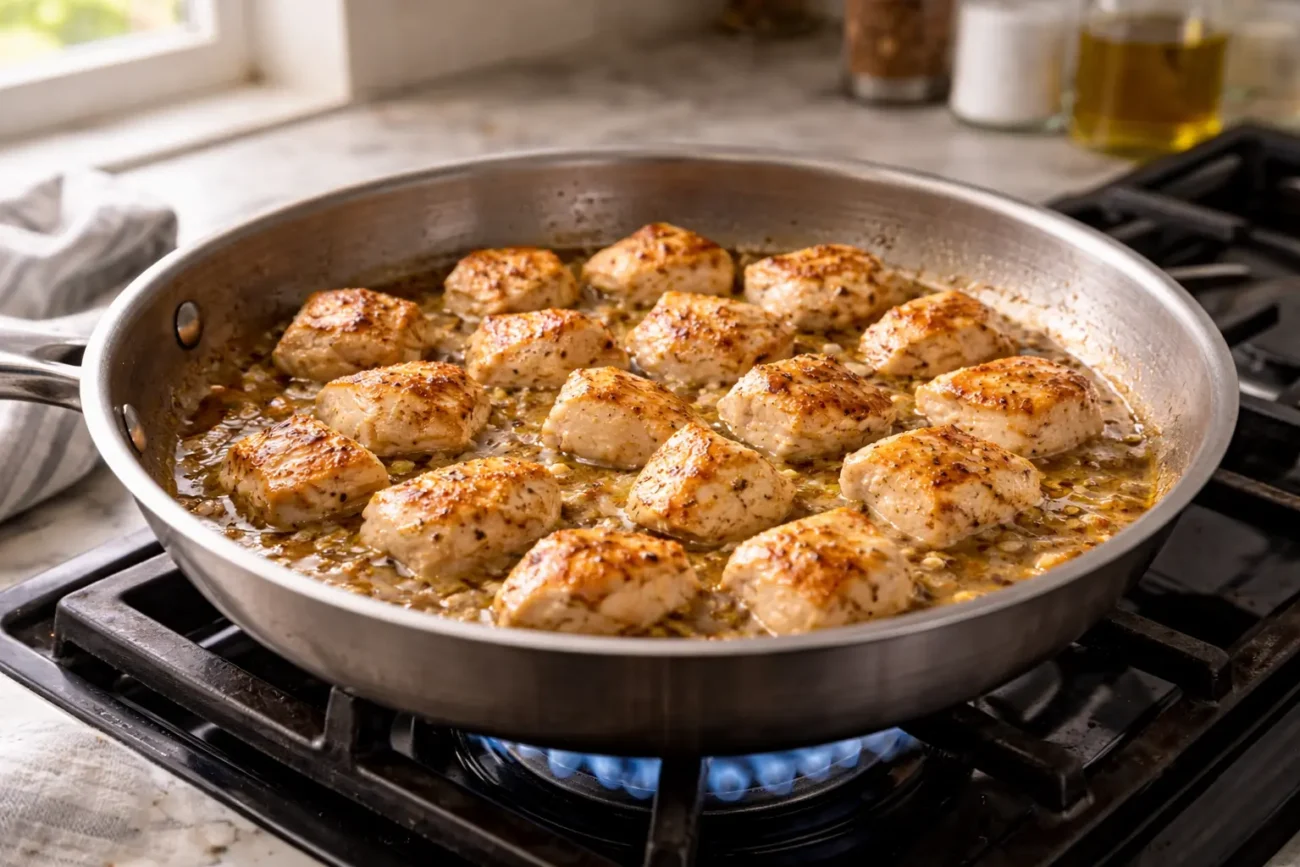
Cooking chicken in a one-pan dinner sounds simple. However, if the chicken turns out dry or under-seasoned, the entire meal suffers.
When you’re building meals like creamy chicken and rice, the chicken sets the foundation. Because everything cooks together, the way you handle the chicken at the beginning affects the final texture and flavour.
This guide explains how to cook chicken properly for one-pan meals so it stays tender, evenly cooked, and balanced inside dishes like our one-pan creamy chicken and rice.
This guide explains how to cook chicken properly for one-pan meals so it stays tender, evenly cooked, and balanced inside dishes like one-pan chicken & rice, where proper searing directly affects the final rice texture.
Time Breakdown
| Stage | Time |
|---|---|
| Prep Time | 10 minutes |
| Cook Time | 25 minutes |
| Total Time | 35 minutes |
Why This Technique Is Important
In one-pan cooking, chicken does more than provide protein. It creates the flavor base for the entire dish.
First, browning the chicken builds savory depth in the pan. Then, as rice or vegetables cook in the same pan, they absorb those juices. If the chicken is rushed or overcrowded, you lose that flavor layer.
Therefore, learning this simple technique improves every chicken-and-rice variation in the cluster.
When This Technique Fits Best Into Your Cooking Routine
This approach works best when:
• You’re cooking chicken and rice together
• You want fewer dishes
• You need consistent weeknight results
• You’re meal-prepping
• You’re still building confidence with chicken
If you regularly make practical dinners like creamy baked chicken & rice or other one-pan comfort meals, mastering this step saves time long term.
If you regularly make practical dinners like creamy chicken and rice, mastering this step improves texture and prevents dryness across the entire pan.
Ingredients Overview
This is not about complicated seasoning. Instead, it focuses on timing, heat control, and surface browning.
You only need basic oil, seasoning, and properly cut chicken. The key is how you cook it, not how many ingredients you use.
Ingredients
• 1 1/2 pounds boneless skinless chicken breasts or thighs
• 1 tablespoon olive oil
• 1/2 teaspoon salt
• 1/2 teaspoon black pepper
• Optional: 1/2 teaspoon paprika
Ingredient Breakdown
Chicken Cut:
Breasts cook leaner and faster. Thighs stay slightly juicier.
Oil Base:
Olive oil prevents sticking and encourages browning.
Seasoning:
Simple salt and pepper allow the chicken to blend into different one-pan recipes.
Step-by-Step Instructions
- Pat the chicken dry with paper towels. Moisture prevents browning, so this step matters.
- Cut the chicken into even pieces if using breasts. Uniform size ensures even cooking.
- Heat olive oil in a large skillet over medium heat. Let the oil warm fully before adding chicken.
- Add chicken in a single layer. Do not overcrowd the pan. If necessary, cook in batches.
- Let the chicken cook undisturbed for 4–5 minutes. This allows browning to develop.
- Flip and cook another 3–4 minutes until lightly golden. The chicken does not need to be fully cooked through if it will continue cooking with rice.
- Remove from heat or proceed with your one-pan recipe immediately.
- In baked formats such as creamy chicken alfredo rice, this initial browning stage becomes even more important because the chicken continues cooking alongside the rice in the oven.
This is the same foundation used in our creamy chicken and rice weeknight dinner and other variations within the one-pan chicken collection.
Nutrition Information
Approximate per serving (based on 4 servings):
| Nutrient | Approximate Amount (per serving) |
|---|---|
| Calories | 520 kcal |
| Protein | 38 g |
| Carbohydrates | 36 g |
| Fat | 26 g |
Nutrition values are estimates and vary depending on portion size and cut.
Recipe Overview
This technique works because browning creates flavor through surface contact with heat.
When chicken develops light golden edges, it builds a savory base. Then, as rice or broth cooks in the same pan, it absorbs that flavor.
As a result, your final dish tastes deeper without extra ingredients.
Recipe At a Glance
| Feature | Details |
|---|---|
| Servings | 4 |
| Skill Level | Beginner |
| Flavor | Savory, mild |
| Cooking Method | Stovetop searing |
| Make-Ahead Suitability | Can prep ahead |
Why This Technique Improves Flavor
Browning adds depth without adding heaviness.
Because one-pan meals rely on layered cooking, the initial sear gives structure to dishes like creamy chicken and rice or baked chicken rice casseroles.
Because one-pan meals rely on layered cooking, the initial sear gives structure to dishes like cream chicken rice, where rice absorbs the browned base directly.
In contrast, skipping this step often leads to flat flavour.
Helpful Tips and Variations
• Use thighs if you prefer a slightly more forgiving texture.
• Avoid stirring too early; movement prevents browning.
• If cooking directly with rice, you can undercook slightly since it will finish simmering.
• For baked variations, sear first, then transfer to oven dishes.
This same foundation supports recipes such as slow-simmered chicken rice, where herb layering depends on properly browned chicken before simmering.
This method supports every recipe inside the One-Pan Chicken & Rice Authority cluster.
Benefits of This Technique
• Prevents dry chicken
• Builds natural flavor
• Reduces need for heavy sauces
• Improves texture
• Strengthens one-pan consistency
Because the base is stronger, the entire meal improves.
Storage and Make-Ahead Notes
Cooked chicken can be refrigerated for up to 3 days.
You can also pre-cook and freeze portions for up to 2 months. However, for the best texture in one-pan meals, fresh searing is recommended.
If chicken and rice is part of your regular dinner rotation, chicken onions creamy rice shows how this same technique translates into a fully structured one-pan meal with deeper onion flavour.
Final Thoughts
One-pan dinners depend on simple foundations.
When you cook chicken properly at the start, the rest of the meal becomes easier and more reliable. Over time, this small technique makes a noticeable difference in flavour and texture across your weeknight rotation.
Disclaimer: This recipe is for general informational purposes only. Results may vary depending on ingredients, equipment, and cooking conditions. Nutrition values are estimates. Always check for allergens and dietary needs, use proper food safety practices, and follow official U.S. guidance at FoodSafety.gov .
Frequently Asked Questions
Why is browning chicken important in one-pan meals? ›
Browning develops surface flavor through direct heat contact. In one-pan dishes, those browned bits become the base that flavors the rice or vegetables cooked afterward.
Should chicken be fully cooked before adding rice? ›
Not necessarily. Lightly browned chicken can finish cooking as the rice simmers. This helps prevent overcooking and keeps the texture tender.
Why does overcrowding the pan affect flavor? ›
When chicken pieces are too close together, they release moisture and steam instead of searing. This prevents proper browning and weakens the overall flavor base.
Is it better to use chicken breasts or thighs for one-pan dinners? ›
Both work well. Breasts cook leaner and faster, while thighs remain slightly more forgiving and tender during longer simmering.
How do I know when the chicken is properly seared? ›
The surface should develop light golden edges and release easily from the pan when flipped. If it sticks firmly, it likely needs more time to brown.
