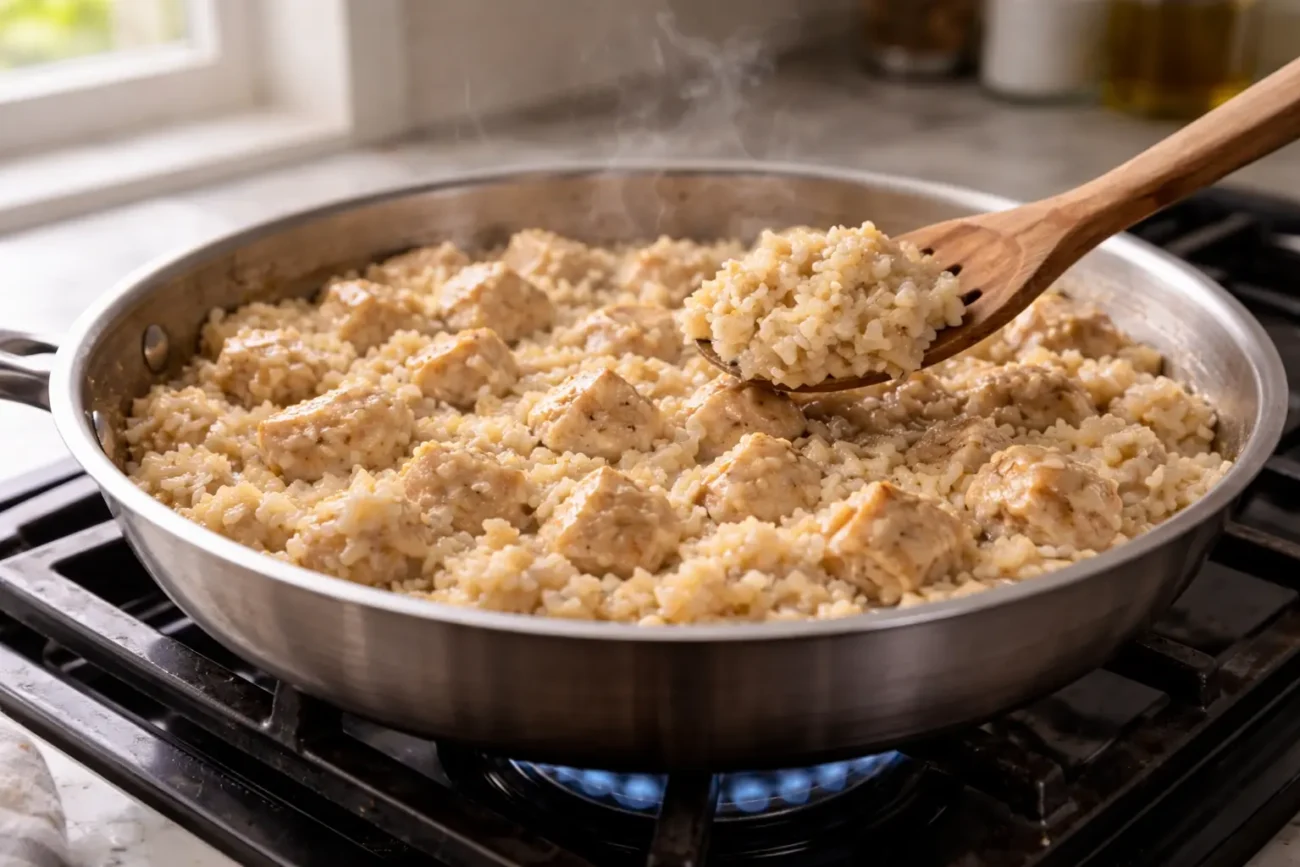
Rice texture is what makes or breaks a one-pan dinner.
In meals like creamy chicken and rice, the rice absorbs broth, cream, and chicken juices all at once. Because everything cooks together, small timing or liquid mistakes can quickly lead to mushy or undercooked rice.
In meals like creamy chicken rice, the rice absorbs broth, cream, and chicken juices all at once, which makes texture control especially important.
This guide explains how to control rice texture in one pan chicken and rice so it turns out tender, structured, and consistent every time.
Time Breakdown
| Stage | Time |
|---|---|
| Prep Time | 5 minutes |
| Cook Time | 20 minutes |
| Rest Time | 5 minutes |
| Total Time | 30 minutes |
Why This Technique Is Important
In one-pan cooking, rice is not just a side. It is the structure of the entire meal.
If the rice is too soft, the dish feels heavy. On the other hand, if it stays firm or dry, the meal feels incomplete. Therefore, understanding liquid ratios, heat control, and resting time is essential.
This is especially important in recipes like our creamy chicken and rice weeknight dinner and baked chicken and rice variations, where the rice carries most of the texture.
This is especially important in recipes like baked chicken rice, where oven heat continues cooking the rice after initial simmering.
When This Technique Fits Best Into Your Day
This technique helps most when:
• You are cooking chicken and rice in the same pan
• You want reliable weeknight results
• You are meal-prepping for a few days
• You are still learning stovetop rice control
If you often make one-pan comfort dinners, mastering rice control saves frustration and wasted ingredients.
Ingredients Overview
The key to proper rice texture is balance.
Long-grain white rice works best because it absorbs liquid evenly while keeping its shape. Meanwhile, the amount of broth and cream must be measured carefully. Heat level also matters more than most people expect.
Even simple seasoning and fat levels influence how rice softens during cooking.
Ingredients
• 1 cup long-grain white rice (uncooked)
• 2 1/2 cups low-sodium chicken broth
• 1/2 cup heavy cream
• 1 tablespoon olive oil or butter
• 1/2 teaspoon salt
Ingredient Breakdown
Rice Type:
Long-grain white rice holds structure better than short-grain varieties.
Liquid Ratio:
About 2 1/2 to 3 cups total liquid per 1 cup rice works best in one-pan meals.
Fat Component:
Oil or butter helps coat the grains and reduces sticking.
Seasoning:
Salt supports flavor but does not affect texture directly.
Step-by-Step Instructions
- Measure liquid carefully. Too much broth causes mushy rice, while too little leaves it undercooked.
- Rinse rice lightly if desired. Although optional, rinsing removes excess surface starch.
- After browning chicken, stir rice into the pan so it coats in oil or pan juices. This step helps control texture.
- Add broth and cream evenly. Stir once, then avoid excessive stirring during cooking.
- In cream-based versions like chicken alfredo rice, precise liquid control becomes even more important because dairy changes absorption slightly.
- Bring to a gentle simmer, not a rolling boil. High heat breaks down the rice structure.
- Cover and cook on low heat for 18–20 minutes.
- Once most liquid is absorbed, turn off heat and let the pan rest, covered, for 5 minutes. Resting allows remaining moisture to distribute evenly.
- Fluff gently with a fork before serving.
This same structure is used in our base one-pan creamy chicken and rice recipe, which relies on proper rice control for consistency.
This is the same foundational structure used in one-pan chicken rice, where properly coated rice prevents sticking and uneven softening.
Nutrition Information
Approximate per serving (rice base only):
| Nutrient | Approximate Amount (per serving) |
|---|---|
| Calories | 210 kcal |
| Protein | 4 g |
| Carbohydrates | 36 g |
| Fat | 6 g |
Nutrition values are estimates and vary depending on added ingredients.
Recipe Overview
This technique works because rice cooks through absorption.
As liquid heats, the grains soften and expand. However, if heat is too high, starch releases too quickly. On the other hand, if liquid is insufficient, the rice remains firm.
Controlled simmering and resting create balanced texture.
Recipe At a Glance
| Feature | Details |
|---|---|
| Servings | 4 |
| Skill Level | Beginner |
| Flavor | Savory, mild |
| Cooking Method | Stovetop searing |
| Make-Ahead Suitability | Can prep ahead |
Why This Technique Improves Texture
Rice texture depends on moisture balance and heat stability.
When cooked gently, grains remain separate but tender. Meanwhile, resting allows excess steam to finish softening without overcooking.
As a result, your one-pan chicken and rice dishes feel structured instead of heavy.
Helpful Tips and Variations
• Avoid lifting the lid repeatedly. Steam loss affects cooking balance.
• If rice is slightly firm, add 2–3 tablespoons of warm broth and cover for 3 more minutes.
• If rice becomes too soft, reduce liquid slightly next time.
• For baked versions, cover tightly with foil to trap moisture.
In slower onion-forward versions like chicken onions rice moisture control becomes even more important because longer cooking time increases absorption.
This technique supports all recipes within the One-Pan Chicken & Rice Authority cluster.
Benefits of This Technique
• Prevents mushy texture
• Improves meal consistency
• Reduces food waste
• Strengthens one-pan reliability
• Supports meal prep structure
Because rice forms the base, controlling it improves the entire dish.
Storage and Make-Ahead Notes
Properly cooked rice keeps well for up to 3 days in the refrigerator.
When reheating, add a small splash of broth to restore moisture. Stir gently to prevent breaking the grains.
Freezing is possible for up to 1 month, though texture may soften slightly after thawing.
If you regularly cook structured one-pan meals, slow baked chicken gravy shows how rice control directly affects the final consistency of the entire dish.
Final Thoughts
Rice control may seem small, but it changes everything.
When you understand liquid balance, heat level, and resting time, your one-pan chicken and rice meals become more consistent and dependable. Over time, this technique strengthens every recipe in your weeknight rotation.
Disclaimer: This recipe is for general informational purposes only. Results may vary depending on ingredients, equipment, and cooking conditions. Nutrition values are estimates. Always check for allergens and dietary needs, use proper food safety practices, and follow official U.S. guidance at FoodSafety.gov .
Frequently Asked Questions
Why does rice turn mushy in one-pan meals? ›
Mushy rice usually results from excess liquid or heat that is too high. When starch releases too quickly, the grains lose structure and soften beyond the ideal texture.
What is the best liquid ratio for one-pan chicken and rice? ›
For long-grain white rice, about 2 1/2 to 3 cups of total liquid per 1 cup of rice works well, depending on added cream or vegetables.
Should I stir rice while it cooks? ›
Minimal stirring is best. Excess stirring releases starch and can make the texture sticky rather than structured.
Why is resting time important after cooking rice? ›
Resting allows steam to redistribute evenly through the grains. This final step finishes softening without overcooking the rice.
How can I fix slightly undercooked rice in a one-pan dish? ›
Add 2–3 tablespoons of warm broth, cover tightly, and cook on low for a few additional minutes. Avoid raising the heat sharply.
