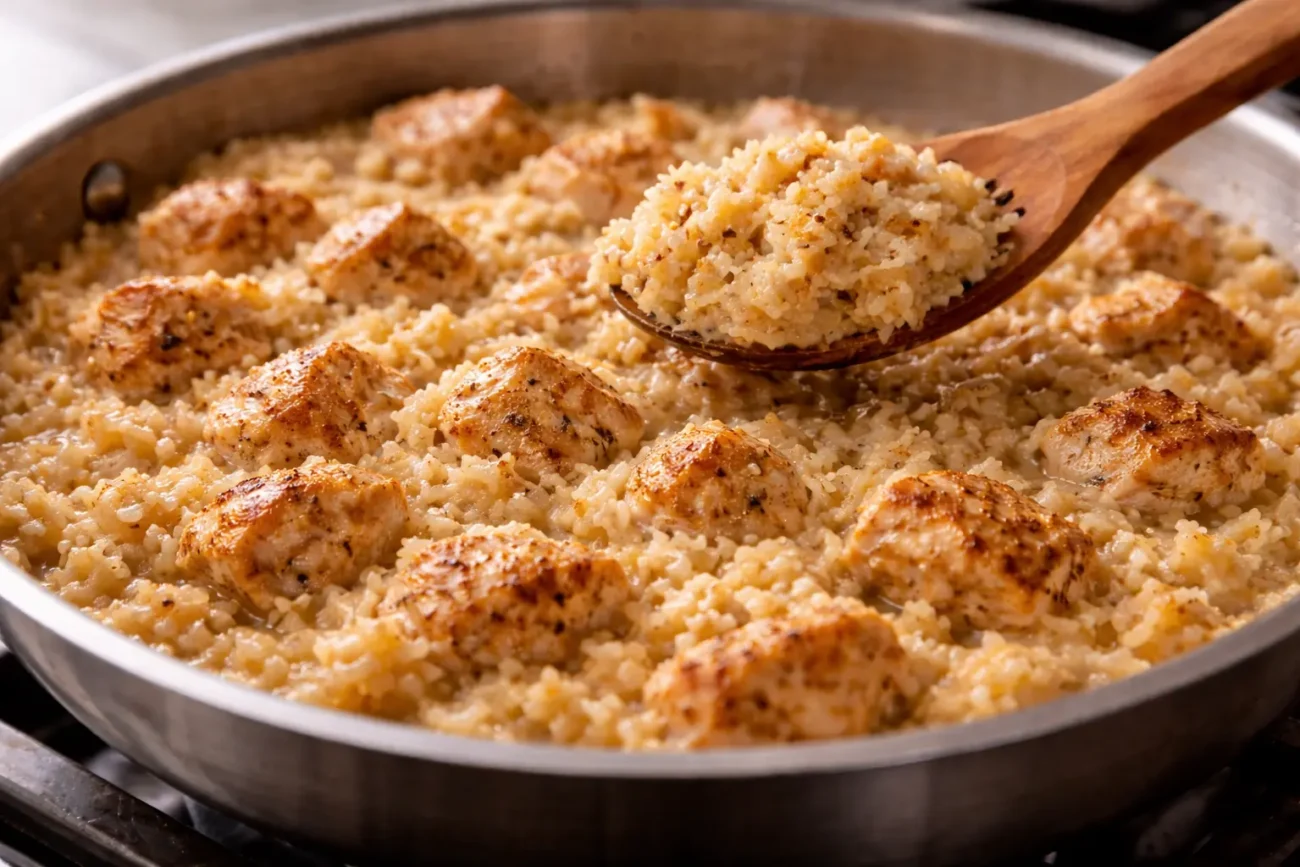
Cream seems simple, but in one-pan chicken and rice, it plays a structural role.
When added at the right time and cooked gently, cream binds broth, starch, and chicken juices into a smooth sauce. However, if overheated or rushed, it can thin out or separate.
Understanding cream science in chicken and rice helps you control consistency without adding flour or extra thickeners.
Time Breakdown
| Stage | Time |
|---|---|
| Prep Time | 5 minutes |
| Cook Time | 20 minutes |
| Rest Time | 5 minutes |
| Total Time | 30 minutes |
Why This Recipe Is Popular
Cream-based chicken and rice meals remain popular because they feel complete in one pan.
They combine protein, starch, and sauce in a way that feels filling without needing side dishes. In addition, the texture appeals to families because it is mild and cohesive.
Recipes like our one-pan chicken rice and creamy chicken rice both depend on how cream behaves during simmering.
When This Recipe Fits Best Into Your Day
This knowledge is especially useful when:
• You are making one-pan creamy chicken and rice
• You want a thicker sauce without cornstarch
• You are adjusting liquid levels
• You are baking a layered chicken and rice dish
If you cook creamy skillet dinners regularly, understanding how cream reacts to heat gives you more control.
Ingredients Overview
Cream contains fat and water.
When heated gently, the fat stays suspended and creates smooth texture. Meanwhile, rice releases starch as it cooks. That starch naturally thickens the cream.
Because of this interaction, timing and temperature matter more than extra ingredients.
Ingredients
• 1/2 cup heavy cream
• 2 1/2 cups low-sodium chicken broth
• 1 cup long-grain white rice
• 1 tablespoon butter or olive oil
• 1/2 teaspoon salt
Ingredient Breakdown
Heavy Cream:
Contains higher fat, which improves stability during simmering.
Rice Starch:
Released gradually and helps thicken liquid naturally.
Fat Base:
Butter or oil supports smooth blending.
Seasoning:
Salt enhances flavor but does not affect structure.
Step-by-Step Instructions
- Brown the chicken first to build a savory base in the pan.
- This same foundation is used in how to cook chicken, where early browning directly affects how the cream binds later in the cooking process.
- Add rice and broth, then bring to a gentle simmer.
- Reduce heat before adding cream. Avoid boiling at this stage.
- In recipes such as chicken alfredo rice, managing heat before adding dairy prevents thinning or separation.
- Stir cream in evenly, then cover and cook on low heat.
- Keep the simmer gentle. Rapid boiling can cause separation.
- Once rice is tender, turn off heat and let the pan rest for 5 minutes.
- During resting, the cream continues thickening as starch settles.
This same approach supports baked versions such as creamy baked chicken & rice and other layered family meals.
This same approach supports baked versions such as baked chicken rice, where oven heat continues thickening the sauce.
Nutrition Information
Approximate per serving (cream portion only):
| Nutrient | Approximate Amount (per serving) |
|---|---|
| Calories | 210 kcal |
| Protein | 4 g |
| Carbohydrates | 36 g |
| Fat | 6 g |
Nutrition values are estimates and vary depending on brand and portion size.
Recipe Overview
Cream works through fat stability and heat control.
When kept at a gentle simmer, the fat stays evenly distributed. At the same time, rice starch thickens the liquid gradually.
Because both processes happen together, the result becomes smooth rather than watery.
Recipe At a Glance
| Feature | Details |
|---|---|
| Servings | 4 |
| Skill Level | Beginner |
| Flavor | Mild, creamy |
| Cooking Method | Gentle stovetop simmer |
| Make-Ahead Suitability | Stable for 2–3 days |
Why This Recipe Tastes Good
Cream carries flavor evenly across the dish.
It softens the rice texture and binds chicken juices with broth. As a result, the meal feels unified instead of layered separately.
When controlled properly, the sauce stays smooth without becoming heavy.
Helpful Tips and Variations
• Always use heavy cream instead of half-and-half for better stability.
• Lower heat before adding cream.
Proper rice absorption in rice control chicken & rice also depends on gentle simmering before dairy is introduced.
• Let the dish rest before judging thickness.
• For baked versions, cover tightly with foil to trap moisture.
This technique strengthens every creamy variation inside the One-Pan Chicken & Rice Authority ecosystem.
Benefits of This Recipe
• Prevents curdling
• Improves sauce consistency
• Reduces need for flour or starch
• Supports meal prep stability
• Builds confidence with creamy dishes
Because cream is central to this cluster, understanding it improves multiple recipes at once.
Storage and Make-Ahead Notes
Cream-based chicken and rice keeps well for up to 3 days refrigerated.
When reheating, warm gently over low heat and add a small splash of broth if needed. Avoid high heat, which may cause separation.
Freezing is possible for up to 1 month, though texture may soften slightly after thawing.
If creamy chicken and rice is part of your regular rotation, herb chicken rice shows how proper cream timing affects the final one-pan structure.
Final Thoughts
Cream is reliable when treated carefully.
When you manage heat, timing, and resting, your chicken and rice stays smooth and stable. Over time, this understanding strengthens every one-pan dinner in your weekly rotation.
Disclaimer: This recipe is for general informational purposes only. Results may vary depending on ingredients, equipment, and cooking conditions. Nutrition values are estimates. Always check for allergens and dietary needs, use proper food safety practices, and follow official U.S. guidance at FoodSafety.gov .
Frequently Asked Questions
Why does cream make chicken and rice taste richer? ›
Cream contains fat, which coats the rice and chicken, creating a smoother mouthfeel and carrying flavor more evenly throughout the dish.
Does cream change how rice cooks? ›
Yes, cream slightly slows absorption because of its fat content. This can help create a softer, more cohesive texture when balanced with broth.
Can I replace cream with milk? ›
Milk can be used, but it has less fat and produces a lighter consistency. The final dish will be less thick and slightly less rich.
Why can cream cause a sauce to feel too heavy? ›
Excess cream increases fat concentration. If not balanced with broth or proper simmering, the texture can become overly dense instead of smooth.
When should cream be added in a one-pan chicken and rice recipe? ›
Cream is best added after the rice has begun absorbing broth. This allows the grains to cook properly before thickening begins.
