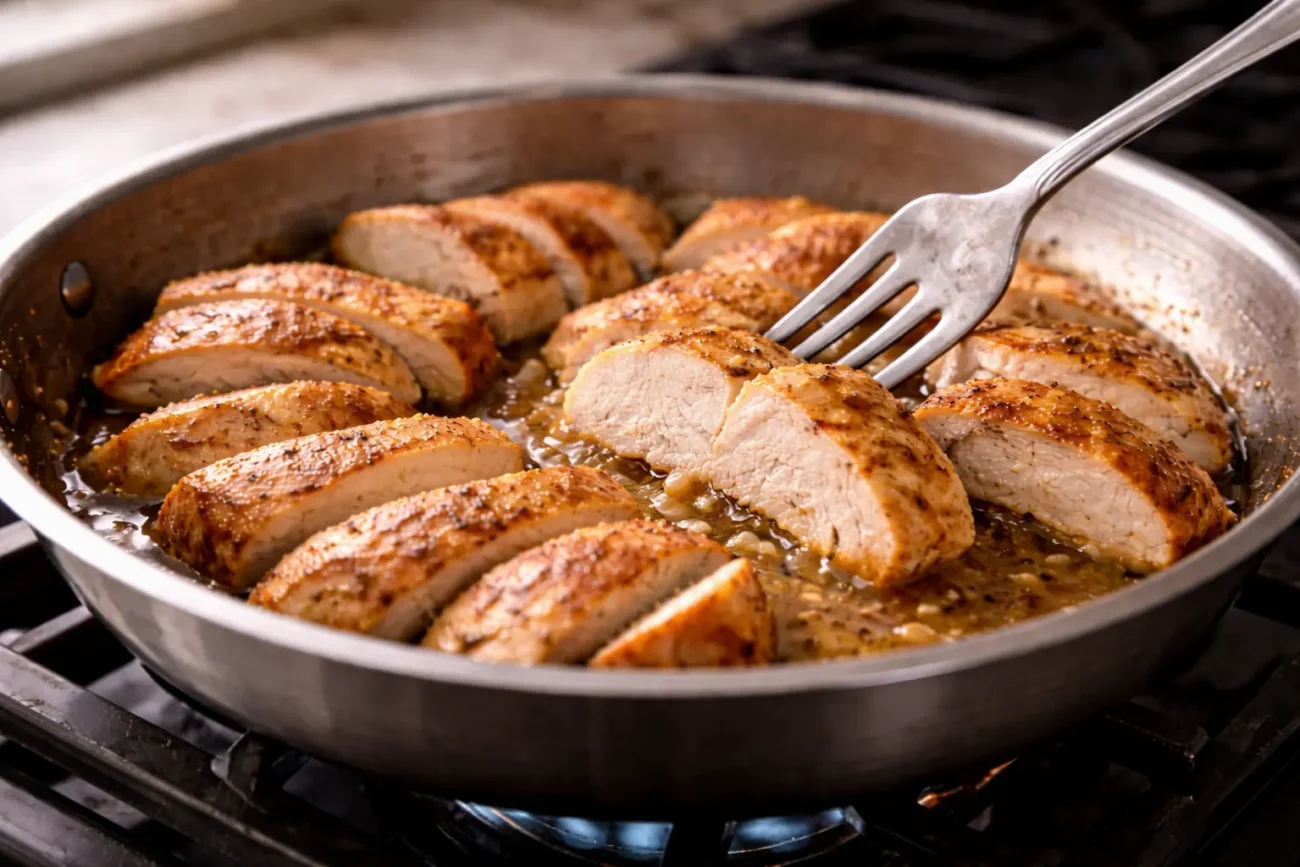
Dry chicken is one of the most common dinner frustrations.
It looks fine in the pan, but once you take a bite, it feels firm and stringy. This happens often in weeknight meals like chicken and rice, where everything cooks together and timing matters.
If you’ve ever wondered why chicken turns dry, the answer is usually simple. Once you understand it, your one-pan dinners become more consistent and dependable.
Time Breakdown
| Stage | Time |
|---|---|
| Prep Time | 5 minutes |
| Cook Time | 20–25 minutes |
| Rest Time | 5 minutes |
| Total Time | 30–35 minutes |
Why This Recipe Is Popular
People search this question because it happens often.
Chicken is lean, affordable, and used in many family meals. However, it cooks quickly and can lose moisture faster than most people expect.
In recipes like our one pan chicken and rice or faster skillet versions such as creamy chicken and rice, dryness usually comes from heat control and timing, not from the recipe itself.
When This Recipe Fits Best Into Your Day
This guide helps most when:
• You cook chicken and rice regularly
• You’re meal prepping for several days
• You’re using chicken breast
• You reheat leftovers often
• You want predictable weeknight results
If chicken feels dry more often than tender, small adjustments make a noticeable difference.
Ingredients Overview
Chicken naturally contains moisture.
However, when exposed to high heat for too long, the muscle fibers tighten and push that moisture out. Lean cuts like breast are especially sensitive to this.
Because one-pan chicken and rice simmers for 20–30 minutes, the cut and cooking stage both matter.
Ingredients
• 1 1/2 pounds boneless skinless chicken breasts or thighs
• 1 tablespoon olive oil
• 1/2 teaspoon salt
• 1/2 teaspoon black pepper
Optional for one-pan meals:
• 1 cup long-grain white rice
• 2 1/2 cups chicken broth
Ingredient Breakdown
Chicken Breast
Lean, cooks quickly, more prone to dryness.
Chicken Thighs
Slightly higher fat, more forgiving during simmering.
Oil
Helps prevent surface moisture loss during browning.
Seasoning
Enhances flavor but does not prevent dryness.
Step-by-Step Instructions
- Pat the chicken dry before cooking. Surface moisture prevents proper browning.
- Heat oil in a skillet over medium heat. Avoid starting with high heat.
- Brown the chicken lightly for 4–6 minutes. Do not fully cook it at this stage if it will simmer with rice.
- This early stage is explained in more detail inside how to cook chicken, where initial searing directly impacts moisture retention.
- Reduce heat before adding broth or rice. Gentle simmering protects moisture.
- Proper simmer control from rice control also prevents excess evaporation during cooking.
- Cover and cook on low rather than medium-high. Rapid boiling pulls moisture out faster.
- Once chicken reaches a safe internal temperature, stop cooking immediately.
- Let the dish rest for 5 minutes before serving. Resting allows juices to redistribute.
In dishes like creamy chicken and rice, this timing adjustment alone often solves dryness.
Nutrition Information
Approximate per 4-ounce portion:
| Nutrient | Approximate Amount (per serving) |
|---|---|
| Calories | 165 kcal |
| Protein | 31 g |
| Carbohydrates | 0 g |
| Fat | 3.5 g |
Nutrition values are estimates and vary by portion and cut.
Recipe Overview
Chicken turns dry when it is overcooked or exposed to high heat for too long.
In one-pan meals, chicken often cooks twice: once during browning and again during simmering. If the first stage goes too long, the second stage finishes drying it out.
Cream timing from cream science also affects how moisture is retained in the final stage
Controlling heat and reducing early cook time is usually the simple fix.
Recipe At a Glance
| Feature | Details |
|---|---|
| Servings | 4 |
| Skill Level | Beginner |
| Flavor | Savory, mild |
| Cooking Method | One-pan stovetop |
| Make-Ahead Suitability | Good with proper reheating |
Why This Recipe Tastes Good
Tender chicken holds moisture and blends smoothly with rice and sauce.
When properly cooked, it stays soft rather than firm. The difference is noticeable in creamy one-pan dishes where texture matters.
Because chicken and rice rely on balance, protecting moisture improves the entire meal.
Helpful Tips and Variations
• Use thighs if you often overcook breast.
• Lower heat once liquid is added.
• Avoid lifting the lid repeatedly during simmering.
• For reheating, add a small splash of broth.
These adjustments also support other cluster recipes like baked chicken and rice and meal prep versions.
These adjustments also support baked versions like creamy baked chicken & rice and slower-simmered versions such as slow-simmered chicken rice.
Benefits of This Recipe
• Prevents dry chicken
• Improves one-pan consistency
• Reduces meal frustration
• Helps leftovers stay tender
• Builds cooking confidence
Because chicken is central to many weeknight dinners, solving dryness improves multiple recipes at once.
Storage and Make-Ahead Notes
Store cooked chicken and rice for up to 3 days in the refrigerator.
When reheating, warm gently over low heat. Add 1–2 tablespoons of broth to restore moisture.
Freezing is possible, though lean breast may firm slightly after thawing.
If dryness keeps happening across multiple variations, revisit the full structure inside one-pan creamy chicken rice, where timing and layering work together.
Final Thoughts
Dry chicken is usually a heat and timing issue, not a recipe failure.
Once you reduce early browning time and control simmering heat, the texture improves quickly. Small adjustments make your one-pan chicken and rice meals more reliable and satisfying.
Disclaimer: This recipe is for general informational purposes only. Results may vary depending on ingredients, equipment, and cooking conditions. Nutrition values are estimates. Always check for allergens and dietary needs, use proper food safety practices, and follow official U.S. guidance at FoodSafety.gov .
Frequently Asked Questions
Why does chicken breast dry out so quickly? ›
Chicken breast is naturally lean and contains very little fat. When overcooked or exposed to high heat for too long, moisture evaporates rapidly.
What is the simplest fix to prevent dry chicken? ›
Cook over moderate heat and stop as soon as the internal temperature reaches 165°F. Allow the chicken to rest before slicing to retain juices.
Does cutting chicken into smaller pieces increase dryness? ›
Yes, smaller pieces cook faster and can dry out more easily if not monitored. Uniform size and shorter cooking times help maintain tenderness.
How does resting time improve moisture? ›
Resting allows internal juices to redistribute throughout the meat instead of escaping immediately when cut.
Are chicken thighs less likely to dry out? ›
Yes, thighs contain more fat and connective tissue, making them more forgiving during longer cooking or one-pan simmering.
