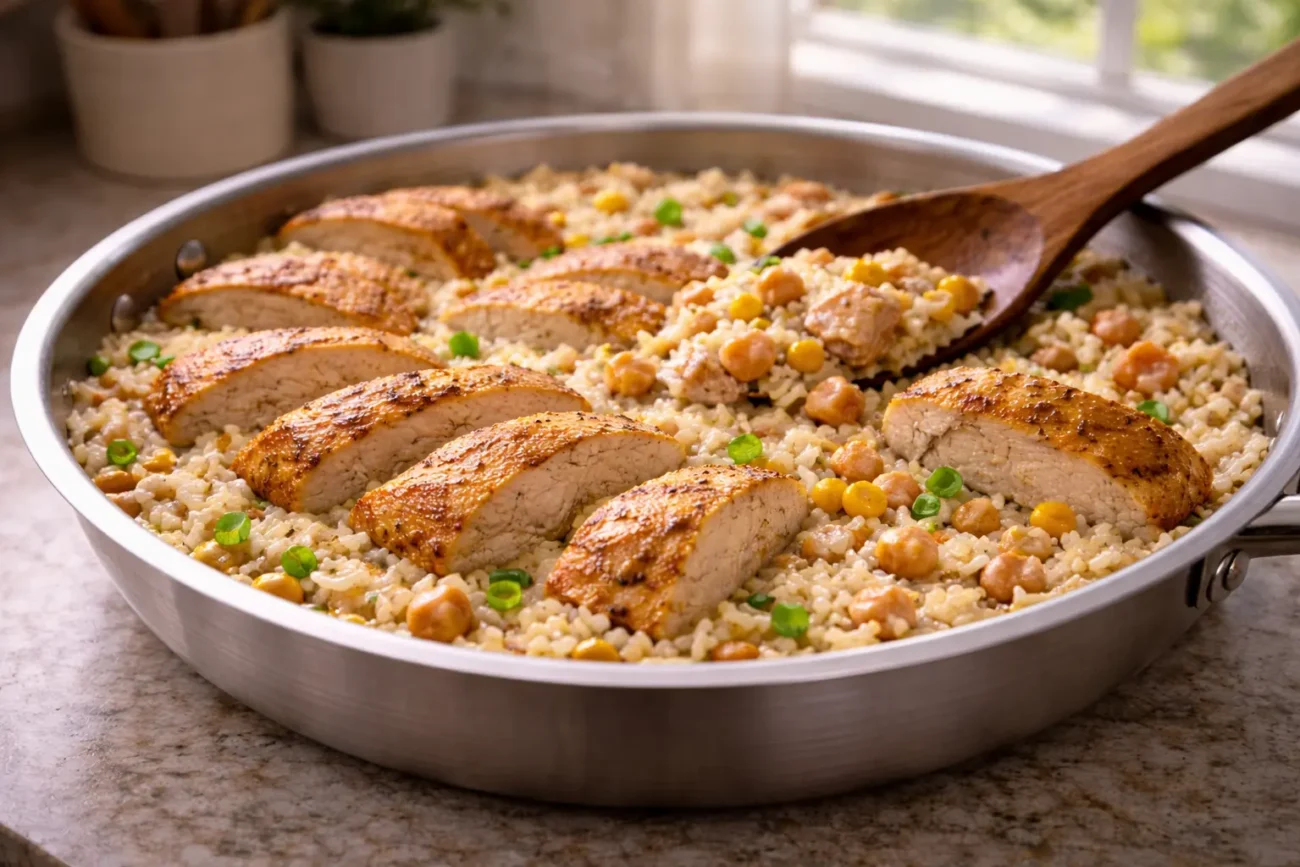
Chicken and rice is often considered a reliable high-protein dinner, especially in structured versions like one-pan chicken & rice.
This usually happens because the protein structure is not balanced correctly. Either the chicken portion is too small, or the cooking process spreads the protein too thin across the dish. As a result, the meal may look complete but feel less substantial.
Once the structure is adjusted properly, the difference becomes clear. The meal feels more filling, more consistent, and much better suited for regular weeknight cooking without requiring complicated changes.
Time Breakdown
| Stage | Time |
|---|---|
| Prep Time | 10 minutes |
| Cook Time | 25 minutes |
| Total Time | 35 minutes |
Why This Recipe Is Popular
This version is popular because it improves a familiar meal without making it more difficult. Chicken and rice already uses affordable ingredients and simple steps. With small adjustments, it becomes much more effective as a high-protein dinner.
This improvement builds directly on the base structure used in creamy chicken & rice, where moisture and protein remain balanced.
In addition, it works well for families and individuals who rely on dependable meals. It reheats easily, fits into meal prep routines, and provides steady results when the structure is correct.
Most importantly, it improves fullness without changing the identity of the dish. The meal still feels familiar, but the results are noticeably better.
When This Recipe Fits Best Into Your Day
This approach works especially well for weeknight dinners when you need something filling and dependable. It allows you to cook once and feel satisfied without needing extra portions later.
It is also useful for meal prep. When protein balance is improved, the meal holds its structure better during reheating and remains satisfying the next day.
Many people use this structure when they want consistent results from chicken and rice without changing their entire routine.
Ingredients Overview
The key to improving protein is adjusting the ratio between chicken and rice while maintaining proper moisture. When the chicken portion increases slightly and the liquid is controlled, the rice absorbs protein-rich flavour while staying balanced.
This balance follows the same moisture structure explained in rice control, which governs texture stability.
Supporting ingredients like milk and cheese improve cohesion. Meanwhile, aromatics distribute flavor evenly so the meal feels complete.
Ingredients
• 1 1/2 pounds boneless skinless chicken breast, cut into medium pieces
• 1 cup long-grain white rice
• 2 cups chicken broth
• 1 tablespoon oil
• 1/2 cup finely chopped onion
• 2 cloves minced garlic
• 1/2 cup milk
• 1/4 cup grated cheese
• 1 teaspoon salt
• 1/2 teaspoon black pepper
Ingredient Breakdown
Protein Base
Chicken breast provides the primary protein structure. A slightly higher amount improves balance and fullness.
Rice Foundation
Long-grain rice absorbs protein-rich liquid while maintaining separation and structure.
Support Structure
Milk and cheese improve cohesion and help distribute protein evenly.
Flavor Layer
Onion, garlic, broth, salt, and pepper create balanced flavor without overpowering the dish.
Step-by-Step Instructions
- Heat oil in a large deep skillet over medium heat. Add the chicken pieces and cook for 4–5 minutes until lightly browned on the outside.
- This early stage mirrors the searing foundation explained in cooking chicken, which preserves moisture.
- Remove and set aside.
- In the same pan, add the chopped onion. Cook for 2–3 minutes until softened. Then add the minced garlic and cook briefly.
- Add the uncooked rice and stir for about 1 minute. This helps the grains absorb the existing flavour in the pan.
- Pour in the chicken broth and milk. Stir gently and bring to a light simmer.
- Return the chicken to the pan. Cover and cook on low heat for 15–18 minutes until the rice becomes tender and the liquid is absorbed.
- Sprinkle the grated cheese over the top. Allow it to melt naturally.
- Let the dish rest for 5 minutes before serving. This helps the structure settle and improves texture.
Nutrition Information
| Nutrient | Approximate Amount (per serving) |
|---|---|
| Calories | 520 kcal |
| Protein | 42 g |
| Carbohydrates | 36 g |
| Fat | 18 g |
Nutrition values are estimates and vary depending on ingredient selection and portion size.
Recipe Overview
This structure works because the protein remains the dominant element in the dish. By slightly increasing the chicken ratio and controlling liquid levels, the rice absorbs flavor without weakening the protein balance.
As explained in cream science, proper liquid balance helps distribute richness evenly.
This structure also works well alongside faster variations and alternative versions without losing effectiveness.
Recipe At a Glance
| Feature | Details |
|---|---|
| Servings | 4 |
| Skill Level | Beginner |
| Flavor | Mild and savory |
| Cooking Method | One-pan stovetop |
| Make-Ahead Suitability | Excellent |
Why This Recipe Tastes Good
The improved protein ratio creates better balance in every bite. Instead of feeling rice-heavy, the dish feels structured and complete.
At the same time, controlled liquid levels prevent dryness. The rice remains tender while the chicken stays moist.
This creates a meal that feels reliable, filling, and comfortable.
Helpful Tips and Variations
- Use chicken breast for higher protein density and cleaner structure.
- Avoid excessive liquid, as too much moisture weakens the protein balance.
Excess liquid can also contribute to moisture imbalance, explained in why chicken turns dry?
Benefits of This Recipe
Improves protein balance using simple adjustments.
Supports meal prep and reheating.
Uses affordable ingredients.
Maintains a familiar cooking process.
Produces consistent results.
Storage and Make-Ahead Notes
Store leftovers in an airtight container in the refrigerator for up to 4 days.
Reheat gently with a small amount of broth or milk to restore texture.
Freezing is possible for up to 2 months, though fresh preparation provides the best texture.
Final Thoughts
Chicken and rice become significantly more effective when protein balance is adjusted correctly. Small structural changes improve fullness without increasing complexity.
Once the ratio and liquid balance are controlled, the meal becomes more dependable and satisfying. This makes it a reliable option alongside core recipes like creamy chicken skillet, where structure defines consistency.
Disclaimer: This recipe is for general informational purposes only. Results may vary depending on ingredients, equipment, and cooking conditions. Nutrition values are estimates. Always check for allergens and dietary needs, use proper food safety practices, and follow official U.S. guidance at FoodSafety.gov .
