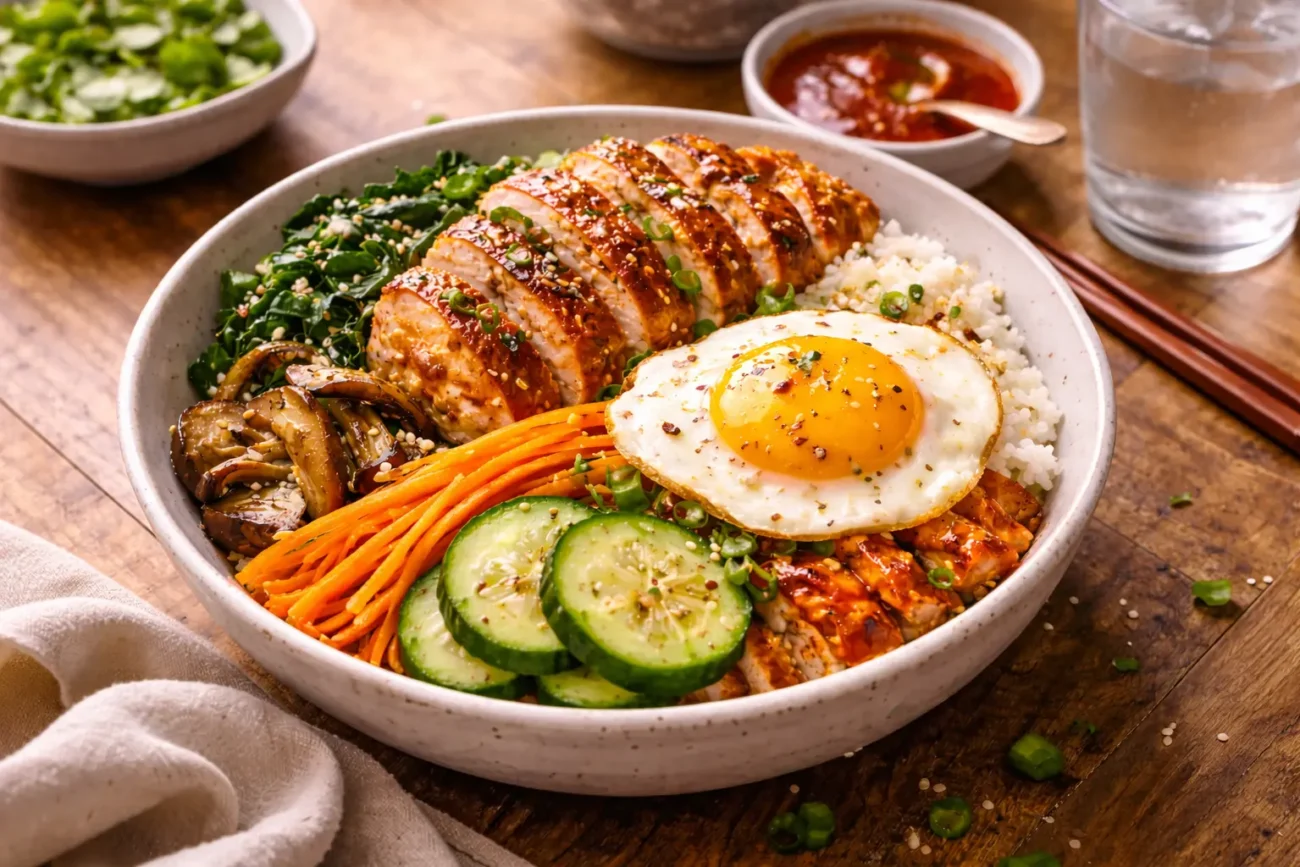
Chicken and rice bowls remain one of the most dependable meal formats because they combine protein, carbohydrates, and moisture in one structure. This creates a complete meal without needing multiple separate components. This same reliable foundation is demonstrated in one-pan chicken rice.
This Korean-style version builds on that foundation while introducing a balanced flavor profile. The rice absorbs the cooking liquid, while the chicken provides structure and protein density. Vegetables support texture without making the process complicated.
Once the correct order and ratios are followed, the result becomes consistent. This makes it suitable for regular weeknight cooking, meal prep, and repeat use.
Time Breakdown
| Stage | Time |
|---|---|
| Prep Time | 10 minutes |
| Cook Time | 25 minutes |
| Total Time | 35 minutes |
Why This Recipe Is Popular
This recipe is popular because it combines comfort and structure in one bowl. It delivers reliable protein and balanced texture using accessible ingredients. This protein stability follows the same principles used in high-protein chicken & rice.
It also fits busy schedules. The entire meal can be prepared in one pan, which reduces cleanup and simplifies cooking.
Most importantly, it remains consistent. Once the structure is learned, the results stay predictable across repeated cooking sessions.
When This Recipe Fits Best Into Your Day
This recipe works especially well for weeknight dinners when time and energy are limited. It provides a complete meal without requiring complex preparation. Proper rice structure is essential for consistency, as explained in rice control.
It is also useful for meal prep. The structure holds well when refrigerated and reheated properly.
Many households rely on meals like this because they support both immediate dinners and future meals.
Ingredients Overview
This recipe works by balancing chicken, rice, and controlled liquid. The chicken provides protein, while the rice absorbs flavour and moisture. This controlled liquid balance follows the structural principles explained in cream science.
Supporting ingredients improve texture without complicating the process.
Small adjustments in liquid and cooking order ensure reliable results.
Ingredients
- 1 1/2 pounds boneless skinless chicken breast, cut into small pieces
- 1 cup long-grain white rice
- 2 cups chicken broth
- 1 tablespoon oil
- 1/2 cup chopped carrots
- 1/2 cup chopped spinach
- 1/2 cup chopped onion
- 2 cloves minced garlic
- 1/4 cup milk
- 1/4 cup grated cheese
- 1 teaspoon salt
- 1/2 teaspoon black pepper
Ingredient Breakdown
Chicken breast: Primary protein source that supports fullness and structure.
Rice: Absorbs moisture and creates the base of the meal.
Milk and cheese: Improve texture and help maintain moisture balance.
Vegetables and aromatics: Support texture and distribute flavor evenly.
Step-by-Step Instructions
- Heat oil in a large pan over medium heat. Add the chicken and cook for 4–5 minutes until lightly browned. Remove and set aside.
- In the same pan, add onion, carrots, and garlic. Cook for 2–3 minutes until softened.
- Add the rice and stir for 1 minute so the grains absorb flavor.
- Pour in the broth and milk. Stir gently and bring to a light simmer.
- Return the chicken to the pan. Cover and cook on low heat for 15–18 minutes until rice becomes tender.
- Add spinach and stir gently. Sprinkle cheese over the top.
- Rest for 5 minutes before serving to allow moisture to stabilize.
Recipes, Facts, & Nutrients
| Nutrient | Amount |
|---|---|
| Calories | 520 kcal |
| Protein | 42 g |
| Carbohydrates | 36 g |
| Fat | 18 g |
Nutrition values are estimates and vary based on ingredient selection.
Recipe Overview
This structure works because the rice absorbs protein-rich liquid during cooking. This creates balanced texture and prevents dryness.
The chicken cooks within the same moisture environment, which protects tenderness. This approach follows the same reliable method used in other one-pan chicken and rice meals.
This consistency makes the meal dependable across repeated cooking.
Recipe At a Glance
Servings: 4 · Skill Level: Beginner · Flavor: Mild, balanced, savory · Cooking Method: One-pan stovetop · Make-Ahead Suitability: Excellent
Why This Recipe Tastes Good
Balanced moisture is the main reason this recipe works. The rice absorbs flavour while maintaining its structure, which keeps the texture consistent from the first bite to the last.
The chicken remains tender because it cooks in controlled liquid instead of dry heat. Supporting ingredients improve texture and flavour without overwhelming the balance of the bowl.
This creates a dependable meal that feels complete, filling, and consistent every time it is prepared.
Helpful Tips and Variations
Use chicken breast if you want higher protein density and a firmer, more structured result. It stays reliable when cooked with proper moisture control.
Avoid overheating during reheating, as excessive heat causes the rice to dry out and the chicken to become firm. Gentle reheating preserves the original texture.
This structure also works well across other chicken and rice variations. The same balance principles apply when adjusting flavours or cooking styles.
You can also follow the same moisture principles explained in the Cream Science chicken and rice guide and compare them with faster skillet structures or alternative grain bowls.
Benefits of This Recipe
This recipe supports consistent protein intake using simple and accessible ingredients. It fits well into regular weekly cooking without requiring special preparation.
It works especially well for meal prep because the structure remains stable during storage and reheating. This makes it dependable across multiple days.
The ingredients are affordable and widely available, which makes it practical for most households. The process also remains straightforward and repeatable.
Storage and Make-Ahead Notes
Store in airtight containers for up to 4 days. Proper sealing helps preserve moisture and prevent texture loss. This same storage stability process is explained in proper storage & reheating.
When reheating, add a small amount of liquid such as broth, milk, or water. This restores the original balance and prevents dryness.
Freezing is possible for up to 2 months, but refrigerated storage provides the most consistent texture and overall quality.
Final Thoughts
This Korean chicken and rice bibimbap bowl works because it follows a stable and balanced structure. Proper ratios and controlled cooking help protect moisture and protein integrity.
These same structural principles form the foundation of reliable one-pan meals and are explained in the complete master guide.
Once understood, this method produces consistent and repeatable results. It fits naturally into regular weeknight cooking without adding complexity or extra effort.
Disclaimer: This recipe is for general informational purposes only. Results may vary depending on ingredients, equipment, and cooking conditions. Nutrition values are estimates. Always check for allergens and dietary needs, use proper food safety practices, and follow official U.S. guidance at FoodSafety.gov .
