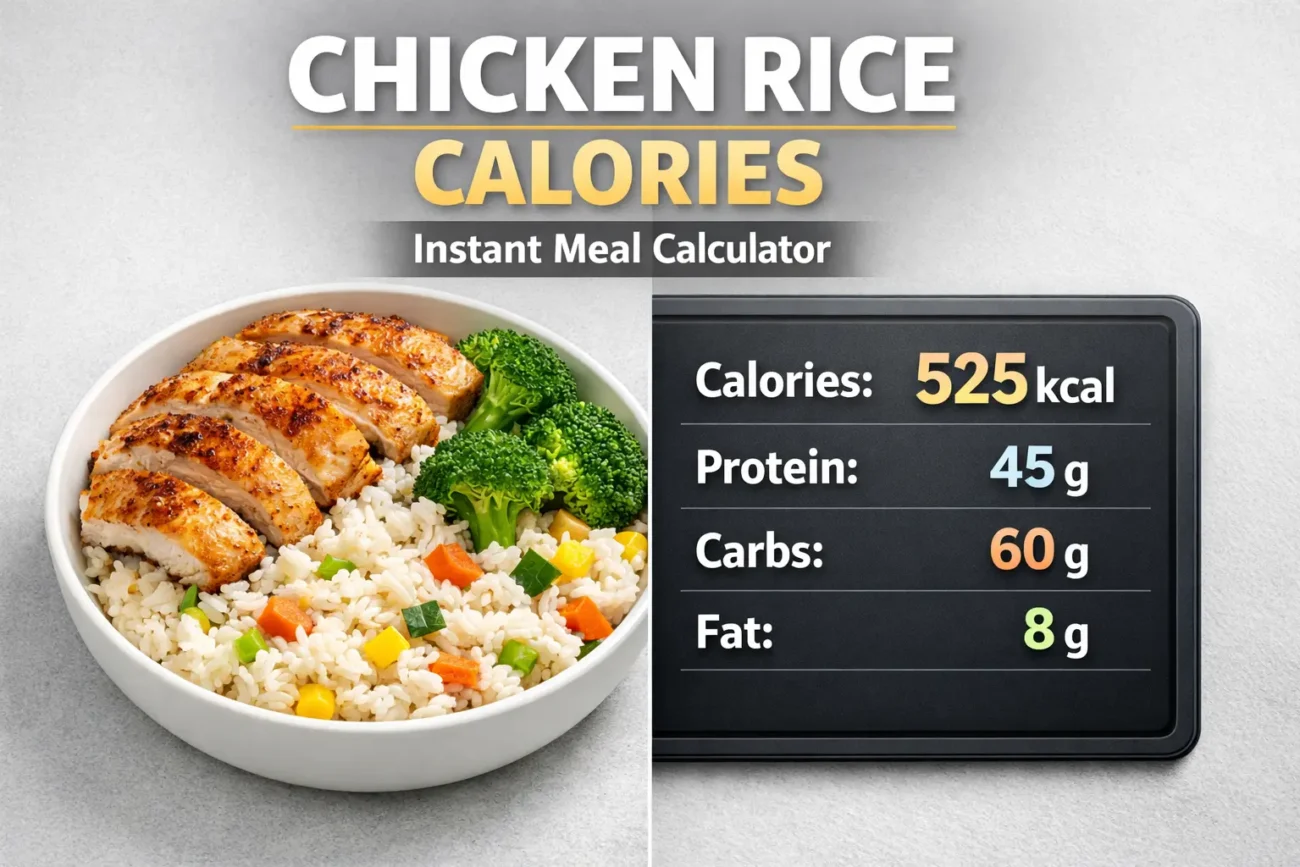
Chicken and Rice Calorie Calculator
Enter the amount of cooked chicken breast and cooked white rice to estimate the total calories, protein, carbohydrates, and fat in your meal.
How Many Calories Are in Chicken and Rice?
Chicken and rice is one of the most searched meals in the United States when it comes to understanding calories and nutrition. People across different lifestyles, from gym beginners to experienced athletes, often search for terms like “chicken and rice calories”, “chicken and rice macros”, and “how many calories in a chicken and rice meal”.
The reason is simple. This meal is easy to prepare, affordable, and widely used in both weight loss and muscle-building diets. However, the actual calorie count depends heavily on portion size, cooking method, and ingredients used.
This is exactly where a tool like this chicken-and-rice-calorie calculator becomes valuable, especially for those following structured meals like ultimate variation. Instead of guessing or relying on general estimates, you can calculate the nutrition of your specific portion in seconds.
Why People in the USA Search for Chicken and Rice Calories
In the United States, there is a strong focus on calorie tracking and macro counting. Many people follow structured eating plans, whether for weight loss, fitness, or general health improvement, often including meals like easy weeknight dinner or one-pot chicken.
Apps like MyFitnessPal have made calorie tracking a daily habit for millions of users. However, when it comes to homemade meals, things become less clear. Unlike packaged food, home-cooked meals do not come with a nutrition label.
This creates a gap. People want to know exactly what they are eating, but they do not have a simple way to calculate it. That is why searches like “calculate calories for my meal” and “nutrition calculator for homemade food” continue to grow.
This calculator is designed to solve that exact problem in the simplest way possible.
How This Chicken and Rice Calories Calculator Works
This calculator begins by taking the values you enter for chicken and rice in grams and converting them into usable numerical inputs. It checks whether both fields are filled, ensuring that no calculation is performed with missing data. Once valid values are entered, the system prepares them for processing, similar to portion consistency seen in creamy skillet dinner. This initial step ensures accuracy by preventing incomplete or incorrect inputs from affecting the results.
The next step is converting the entered amounts into standard units. Since nutrition data is based on 100 grams, the calculator divides each input by 100. This creates a factor that represents how many standard portions are included in your input. For example, 200 grams becomes a factor of 2, which is then used in further calculations, similar to portion handling in juicy chicken breast.
After conversion, the calculator applies fixed nutrition values for each ingredient. These values represent calories, protein, carbohydrates, and fat per 100 grams of cooked chicken and rice. The calculator multiplies the factor by each of these values to determine the total nutrition for each ingredient separately, similar to structured meals like classic comfort meal.
Finally, the calculator adds the results from both ingredients to produce a total nutritional breakdown. It combines calories, protein, carbohydrates, and fat into a single result and rounds the values for clarity, just like balanced meals shown in simple dinner ideas and oven baked chicken. The output is then displayed in a clean and readable format for easy understanding. This structured process ensures the calculator delivers consistent and dependable estimates.
Step-by-Step Breakdown of the Calculation
To understand why the calculator is reliable, it helps to look at how it calculates each value.
When you enter a number like 200 grams of chicken, the calculator divides it by 100. This converts your portion into standard measurement units. In this case, 200 grams becomes 2 units.
Next, it multiplies this number by the nutritional value per 100 grams. For chicken, this includes calories, protein, and fat. The same process is applied to rice.
After calculating each ingredient separately, the calculator combines the results to give you total calories, protein, carbohydrates, and fat for the entire meal.
This method is simple, but it is the same approach used in professional nutrition calculations.
Example Calculation
Let’s say you enter:
Chicken: 200 grams
Rice: 150 grams
The calculator performs the following steps:
Chicken calories:
165 × 2 = 330 kcal
Rice calories:
130 × 1.5 = 195 kcal
Total calories:
525 kcal
It then performs similar calculations for protein, carbohydrates, and fat.
This gives you a complete nutritional overview of your meal in seconds.
Why Chicken and Rice Is Ideal for Nutrition Tracking
Chicken and rice has become a staple meal for people focused on nutrition because it offers a simple and balanced combination of macronutrients.
Chicken provides high-quality protein, which supports muscle growth and helps maintain satiety. Rice provides carbohydrates, which fuel your body and support daily activity.
Because both ingredients are easy to measure and prepare, they are often used in meal prep routines and structured diet plans. Meals like healthy chicken bowl or herb chicken dinner make it even easier to adjust calories based on your goals.
This makes chicken and rice one of the easiest meals to analyze using a calculator like this, especially in healthy chicken bowl.
The Importance of Portion Control
One of the biggest factors affecting calorie intake is portion size. Even small changes in portion size can significantly impact total calories.
For example, increasing rice from 100 grams to 200 grams doubles the carbohydrate content and adds a significant number of calories. The same applies to chicken.
This is why accurate measurement is important. Using a kitchen scale can help you get more precise results, especially if you are tracking calories for specific goals.
Are the Results 100% Accurate?
While this calculator provides a very close estimate, it is important to understand that no nutrition calculator can be perfectly exact.
Several factors can influence the final calorie count, including cooking methods, added fats, and ingredient variations. For example, frying chicken in oil will increase fat and calorie content compared to grilling or baking.
Despite these variables, the calculator still provides a strong baseline that helps you make informed decisions about your meals.
Common Mistakes When Calculating Calories
Many people believe they are accurately tracking calories, but small mistakes can lead to incorrect results. Understanding these common issues can help you get more reliable estimates from the calculator.
One of the most common mistakes is not measuring portions correctly. Eyeballing rice or chicken instead of weighing it can significantly change the calorie count. Even a small difference in grams can add or reduce a noticeable number of calories.
Another mistake is ignoring cooking fats. Oils, butter, or sauces used during cooking can add extra calories that are not always considered. This is especially important when preparing meals like creamy chicken skillet, where added ingredients can increase fat content.
People also tend to assume all chicken cuts are the same. However, chicken breast, thigh, or skin-on pieces have different nutritional values. Using the wrong assumption can lead to inaccurate calculations.
Lastly, many users forget that rice type matters. White rice, brown rice, or flavored rice can all have slightly different calorie values, especially in dishes like healthy chicken bowl.
By avoiding these common mistakes, you can use the calculator more effectively and get results that better reflect your actual meal.
When to Use This Calculator
This chicken and rice calories calculator is useful in many situations.
If you are trying to lose weight, it helps you stay within your daily calorie target. If you are trying to build muscle, it helps you track protein intake. It is also useful for meal planning, portion control, and understanding how your food choices impact your nutrition.
Because it is simple and quick to use, it fits easily into daily routines.
How This Tool Helps You Build Better Eating Habits
Understanding your food is one of the most important steps toward improving your diet. Many people underestimate calories or overlook how portion size affects their intake.
By using this calculator regularly, you can develop a better sense of how much you are eating and how it aligns with your goals. Over time, this awareness can lead to better food choices and more consistent habits. This becomes even easier when preparing meals like
creamy chicken skillet or beginner-friendly options such as beginner chicken dinner.
Final Thoughts
Chicken and rice is one of the most practical and widely used meals for people who want to eat better. However, without understanding the nutrition behind it, it is easy to miscalculate calories and macros.
This chicken and rice calories calculator provides a simple way to estimate your meal accurately. By entering your portion sizes, you can quickly see how many calories, protein, carbohydrates, and fat your meal contains.
It removes guesswork and gives you a clearer picture of your nutrition, helping you stay on track with your goals while keeping your meals simple and enjoyable.
