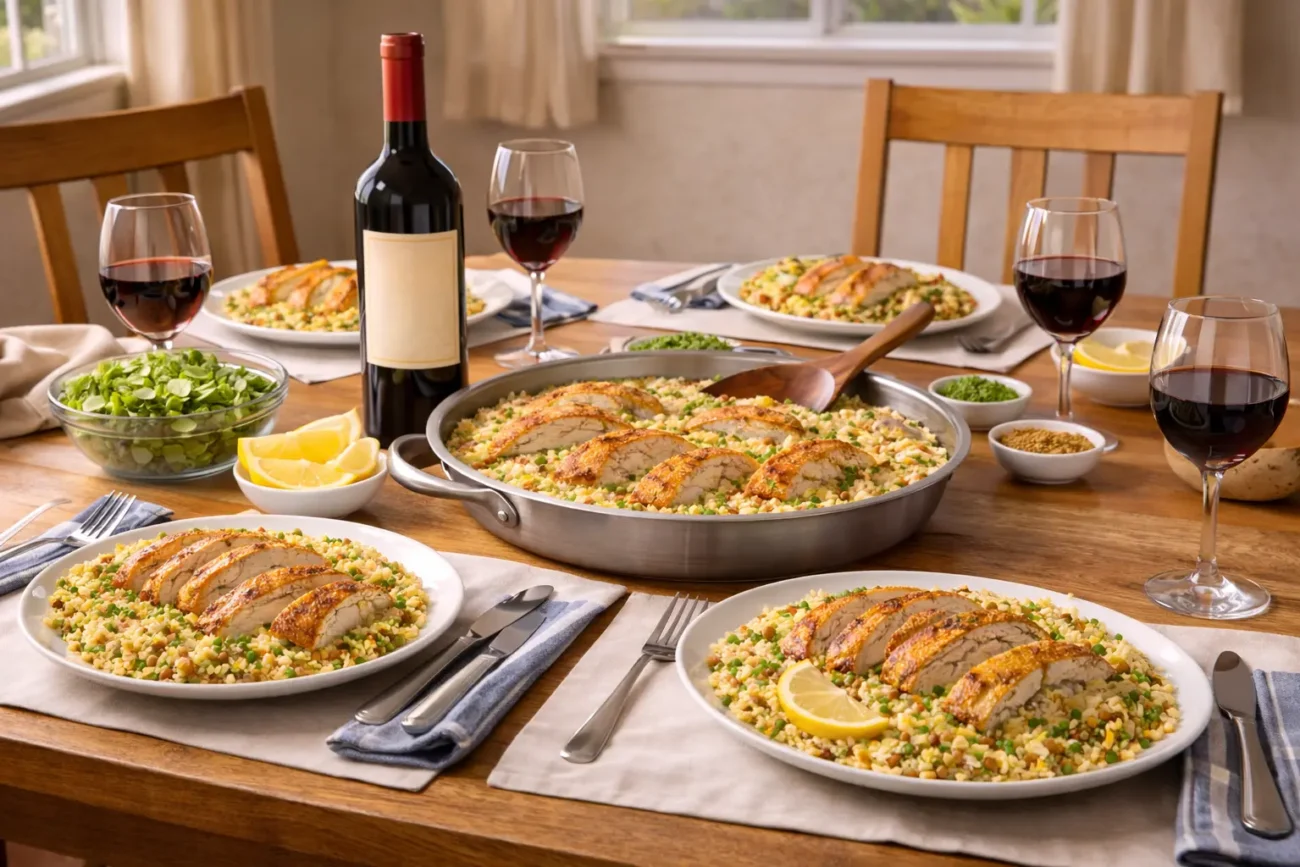
Chicken and rice is one of the most common meals in American households. It is affordable, filling, and works well for busy weeknights when you need something dependable. This long-term reliability is the same foundation demonstrated in one-pan chicken.
However, the results are not always consistent. Sometimes the rice becomes too soft or dry. Other times the chicken loses moisture and feels firm instead of tender. These texture problems are the same structural issues explained in why never turns out right.
Once the structure is understood properly, chicken and rice becomes one of the most reliable meals you can cook. Small adjustments in timing and ratio help stabilize moisture, as explained in cream science
Time Breakdown
| Stage | Time |
|---|---|
| Prep Time | 10 minutes |
| Cook Time | 25 minutes |
| Total Time | 35 minutes |
Why This Recipe Is Popular
Chicken and rice remains popular because it fits real schedules and real budgets. The ingredients are easy to find, and the cooking process works well in one pan. This repeatable method is explained in how to cook chicken.
It is also flexible. You can adjust the protein level or prepare it ahead of time. Higher-protein adjustments follow the same balance used in high-protein chicken.
Most importantly, once the correct method is used, the results remain consistent. This is why many people rely on structured variations like creamy chicken & rice.
When This Recipe Fits Best Into Your Day
This master method works best for weeknight dinners when you need predictable results. Proper rice absorption is essential, which is explained in rice control
It is also ideal for meal preparation. Structured versions like baked chicken rice maintain consistency after storage.
Many people also compare its reliability with other comfort meals. This comparison is explained in chicken rice vs alfredo.
Ingredients Overview
The balance between chicken, rice, and liquid determines the final result. Proper ratios help prevent dryness and protein imbalance. This protein stability is reinforced in creamy chicken rice.
Controlled heat and timing allow both components to finish cooking evenly. These same timing principles apply in slow-cooked variations like herb chicken & rice.
Ingredients
- 1 1/2 pounds boneless skinless chicken breast or thighs
- 1 cup long-grain white rice
- 2 cups chicken broth
- 1 tablespoon oil
- 1/2 cup chopped onion
- 2 cloves minced garlic
- 1/2 cup milk
- 1/4 cup grated cheese
- 1 teaspoon salt
- 1/2 teaspoon black pepper
Ingredient Breakdown
Chicken: Primary protein source. Determines tenderness and overall structure.
Rice: Absorbs liquid and distributes moisture evenly throughout the dish.
Liquid (broth and milk): Controls softness and prevents dryness.
Aromatics: Improve flavor and help balance the overall meal.
Step-by-Step Instructions
- Heat oil in a large pan over medium heat. Add chicken and cook until lightly browned. Proper early cooking helps prevent the dryness. Explained: why? dry fix!.
- Add onion to the same pan and cook for 2–3 minutes until softened. Add garlic and cook briefly.
- Add rice and stir for 1 minute. This helps the grains absorb flavor and cook evenly.
- Pour in broth and milk and reduce heat. This controlled cooking method is the same base used in chicken alfredo rice.
- Return chicken to the pan. Cover and reduce heat to low.
- Cook for 15–18 minutes until the rice is tender and the liquid is absorbed.
- Sprinkle cheese on top and allow it to melt naturally.
- Remove from heat and let rest for 5 minutes before serving.
Recipe Facts & Nutrients
| Nutrient | Amount |
|---|---|
| Calories | 520 kcal |
| Protein | 38 g |
| Carbohydrates | 36 g |
| Fat | 18 g |
Nutrition values are estimates and vary based on ingredients used.
Recipe Overview
This master method ensures both rice and chicken cook evenly. It protects moisture while maintaining structure. These same structural results are achieved in braised chicken onions.
The cooking order allows protein to remain tender while rice absorbs flavour. This workflow is explained fully in chicken & rice guide.
Recipe At a Glance
Servings: 4 · Skill Level: Beginner · Flavor: Mild and savory · Cooking Method: One-pan stovetop · Make-Ahead Suitability: Excellent
Why This Recipe Tastes Good
The balance between protein, starch, and moisture creates a stable texture.
Each component supports the others rather than competing for moisture.
Controlled heat prevents overcooking, which helps maintain tenderness.
This balance allows the meal to remain consistent and dependable.
Helpful Tips and Variations
Use long-grain rice for best structure.
Avoid high heat once liquid is added.
Let the dish rest before serving to stabilise texture.
This structure works well for higher protein adjustments and storage-friendly versions.
Benefits of This Recipe
Uses affordable ingredients.
Works well for regular meal planning.
Provides consistent results.
Supports multiple variations.
Storage and Make-Ahead Notes
Store in airtight containers for up to 4 days.
Reheat with a small amount of liquid.
Avoid overheating to maintain texture.
Freezing is possible for longer storage.
Final Thoughts
Chicken and rice becomes highly reliable when the proper structure is followed. Small adjustments in ratio, timing, and heat improve consistency significantly.
This master method creates a dependable foundation for everyday cooking. It reinforces the same reliable structure demonstrated in one-pan creamy chicken.
Disclaimer: This recipe is for general informational purposes only. Results may vary depending on ingredients, equipment, and cooking conditions. Nutrition values are estimates. Always check for allergens and dietary needs, use proper food safety practices, and follow official U.S. guidance at FoodSafety.gov .
