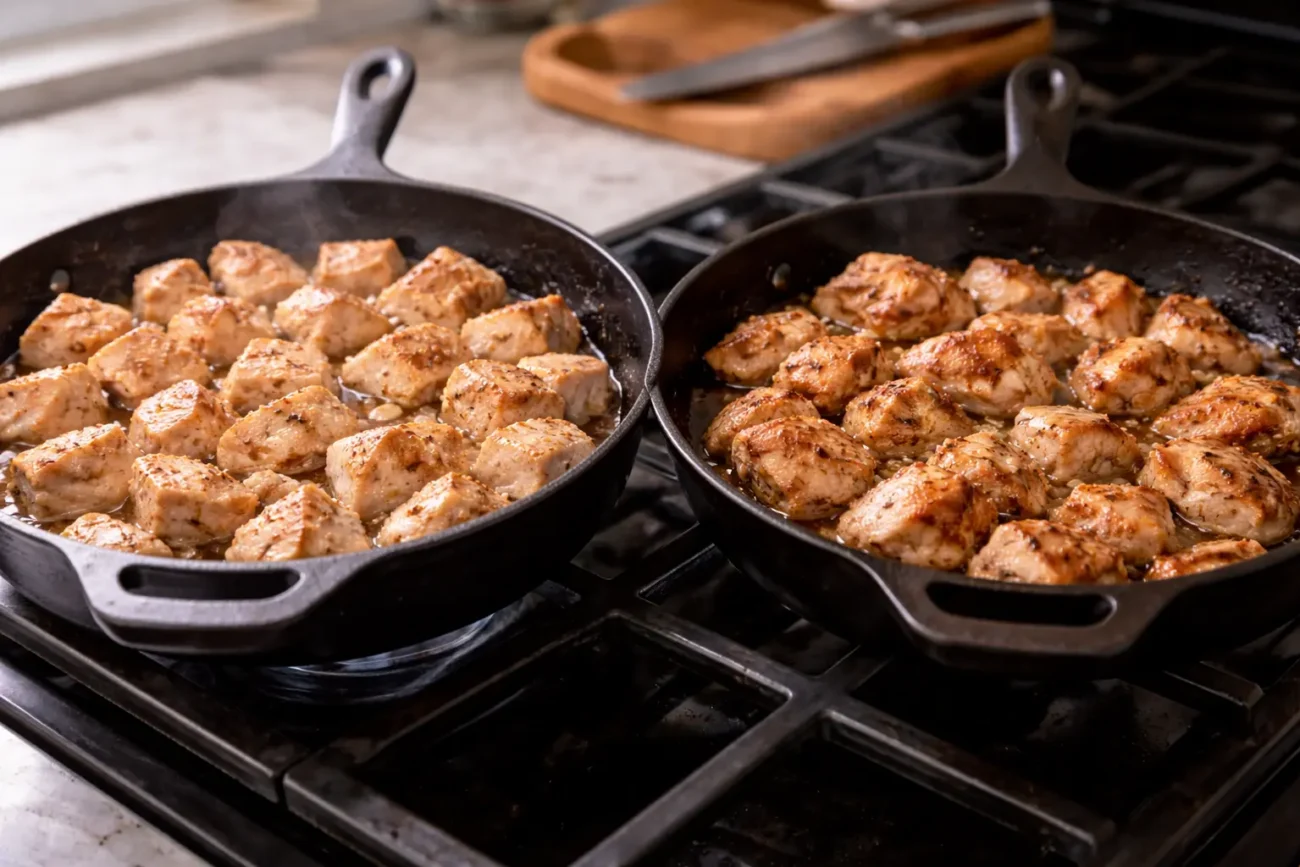
When you make chicken and rice, the cut of chicken makes a noticeable difference.
Some nights you want something lighter. Other nights you want something more forgiving that won’t dry out. Because chicken and rice cook together in one pan, the cut affects texture, moisture, and even leftovers.
If you’ve ever wondered whether chicken breast or thighs work better for chicken and rice, this guide helps you decide based on real weeknight cooking.
Time Breakdown
| Stage | Time |
|---|---|
| Prep Time | 5 minutes |
| Cook Time | 20 minutes |
| Rest Time | 5 minutes |
| Total Time | 30 minutes |
Why This Recipe Is Popular
Chicken and rice is one of the most common weeknight dinners in American homes.
It’s affordable, filling, and easy to scale for families. However, many people don’t realize that dryness or texture issues often come from choosing the wrong cut for the cooking method.
In recipes like our creamy chicken & rice and faster skillet versions like weeknight chicken & rice, the cut changes how the dish turns out.
When This Recipe Fits Best Into Your Day
This guide is most helpful when:
• You’re planning a one-pan dinner
• You’re meal prepping for a few days
• You’re cooking for picky eaters
• You want leftovers that reheat well
• You’re trying to prevent dry chicken
If chicken and rice is part of your weekly rotation, choosing the right cut saves frustration.
Ingredients Overview
Chicken breast is lean and mild.
Chicken thighs contain slightly more fat, which helps them stay tender during longer cooking. Because rice simmers in broth and sometimes cream, the chicken is exposed to steady heat for 20–30 minutes.
That cooking environment favors one cut slightly more than the other, depending on your goal.
Ingredients
• 1 1/2 pounds boneless skinless chicken breasts
or
• 1 1/2 pounds boneless skinless chicken thighs
• 1 tablespoon olive oil
• 1/2 teaspoon salt
• 1/2 teaspoon black pepper
Ingredient Breakdown
Chicken Breast
Lean, lower fat, cooks quickly. Can dry out if overcooked.
Chicken Thighs
Slightly higher fat, more forgiving, stays tender longer.
Seasoning
Simple salt and pepper work for both cuts.
Step-by-Step Instructions
- If using chicken breast, cut into evenly sized pieces. Smaller, uniform pieces cook more evenly with rice.
- If using thighs, trim excess fat but keep pieces slightly larger. They shrink less during cooking.
- Heat oil in a skillet over medium heat.
- Brown the chicken lightly for 4–6 minutes before adding rice and liquid. Do not fully cook through at this stage.
- This same early searing principle is explained in one-pan chicken, where proper browning directly affects final texture.
- Continue with your one-pan chicken and rice recipe.
Proper rice absorption timing from rice control also influences which cut performs better during simmering.
In dishes like creamy chicken and rice, thighs remain softer after simmering. However, breast works well when you control heat and avoid overcooking it.
Nutrition Information
Approximate per 4-ounce portion:
| Nutrient | Chicken Breast (per 100g) | Chicken Thigh (per 100g) |
|---|---|---|
| Calories | 165 kcal | 210 kcal |
| Protein | 31 g | 26 g |
| Fat | 3.5 g | 11 g |
Nutrition values are estimates and vary by brand and portion size.
Recipe Overview
Chicken breast firms up faster because it is lean.
Thighs stay tender longer because fat protects the meat during simmering. In one-pan chicken and rice, where everything cooks together, that difference matters.
If you tend to overcook chicken slightly, thighs may be more forgiving. If you prefer leaner meals, breast works well with careful timing.
Recipe At a Glance
| Feature | Details |
|---|---|
| Servings | 4 |
| Skill Level | Beginner |
| Flavor | Mild vs slightly richer |
| Cooking Method | One-pan stovetop |
| Make-Ahead Suitability | Good for 2–3 days |
Why This Recipe Tastes Good
The cut affects mouthfeel more than flavor intensity.
Breast creates a lighter texture. Thighs create slightly richer bites that blend smoothly with rice and sauce.
Because creamy chicken and rice relies on balance, the right cut improves overall comfort and consistency.
Helpful Tips and Variations
• For cream-based versions, thighs often stay softer.
That’s especially noticeable in recipes like chicken alfredo rice, where longer simmering exposes the meat to steady heat.
• For baked chicken and rice, thighs tolerate longer oven time.
You can see this clearly in baked chicken & rice, where oven heat runs longer than stovetop versions.
• For high-protein goals, breast offers slightly more protein per calorie.
• If unsure, combine both cuts for balanced texture.
This choice supports every variation inside the One-Pan Chicken & Rice ecosystem.
Benefits of This Recipe
• Prevents dry chicken
• Improves texture consistency
• Helps with meal prep planning
• Works for family preferences
• Strengthens one-pan reliability
Because chicken is the main protein, choosing wisely improves the entire meal.
Storage and Make-Ahead Notes
Both cuts store well for up to 3 days in the refrigerator.
When reheating chicken breast, add a small splash of broth to prevent dryness. Thighs generally reheat more smoothly.
Freezing works for both, though thighs maintain texture slightly better after thawing.
If you are comparing texture inside layered versions, slow-simmered chicken rice shows how different cuts behave during extended cooking.
Final Thoughts
There isn’t one universal answer.
Whether chicken breast or thighs for chicken and rice depends on what matters most that night. If you want lean and light, choose breast. If you want tender and forgiving, choose thighs.
Understanding the difference helps your weeknight dinners turn out more consistent and dependable.
Disclaimer: This recipe is for general informational purposes only. Results may vary depending on ingredients, equipment, and cooking conditions. Nutrition values are estimates. Always check for allergens and dietary needs, use proper food safety practices, and follow official U.S. guidance at FoodSafety.gov .
Frequently Asked Questions
Which cut stays more tender in one-pan chicken and rice? ›
Chicken thighs tend to stay slightly more tender because they contain more natural fat, making them more forgiving during longer simmering.
Are chicken breasts better for lighter weeknight meals? ›
Yes, chicken breasts are leaner and cook slightly faster, which can be ideal for lighter versions of creamy chicken and rice.
Does the choice of cut affect cooking time? ›
Yes, thighs generally tolerate longer cooking without drying out, while breasts require closer monitoring to prevent overcooking.
Which cut builds more flavor in one-pan meals? ›
Thighs typically build deeper flavor due to their fat content, which enhances browning and enriches the pan base.
Can I combine breasts and thighs in the same recipe? ›
Yes, combining both cuts can balance tenderness and lean texture. Just ensure pieces are cut evenly for consistent cooking.
