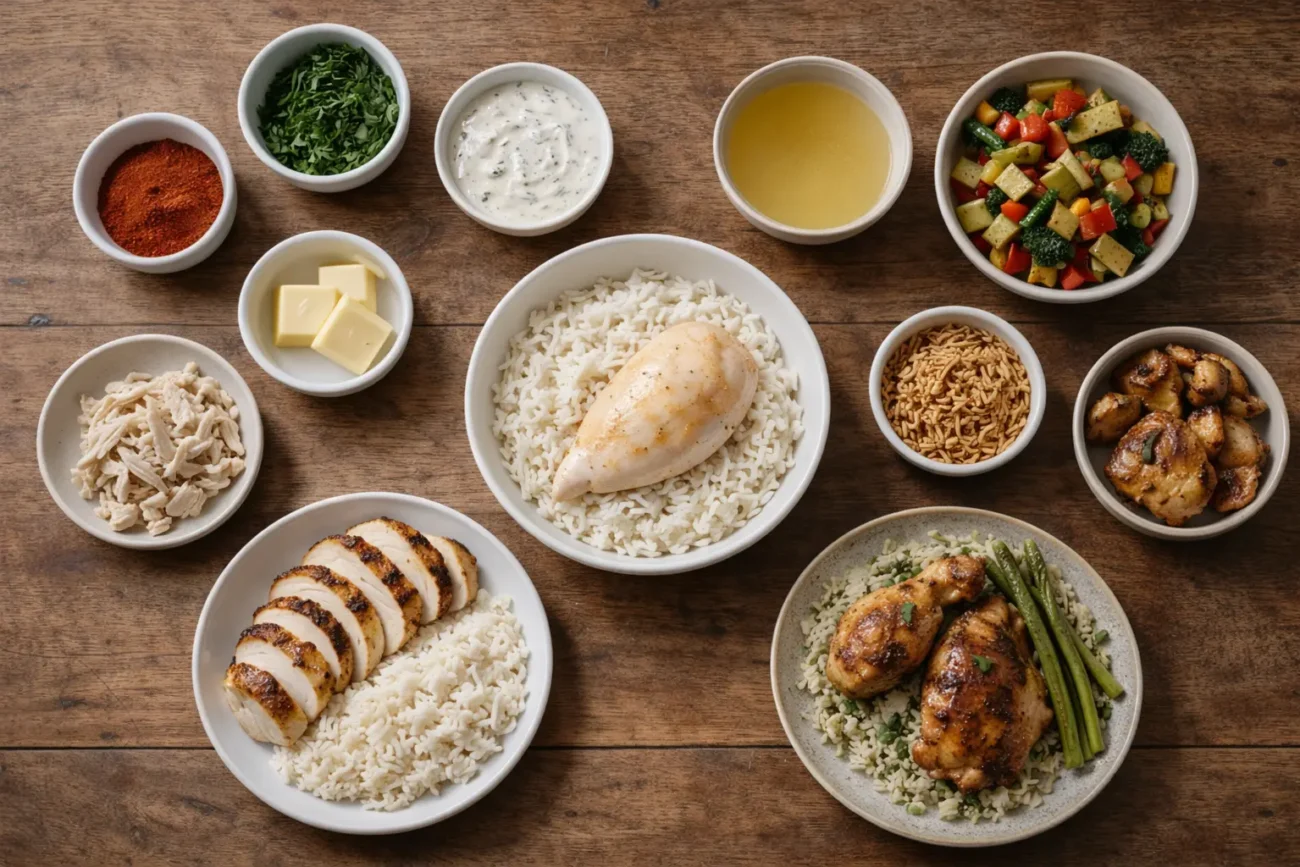
Chicken and rice appear simple at first glance. Many people think the dish is limited because it uses only two main ingredients. However, the real strength of this meal lies in the cooking principles behind it.
These principles allow the same base ingredients to produce hundreds of different results. A small change in seasoning, cooking method, or texture can completely transform the final dish.
Understanding these principles helps explain why chicken and rice exist in so many cuisines around the world. It also shows why the meal rarely becomes truly limited when cooked thoughtfully.
When This Recipe Fits Best Into Your Day
Chicken and rice work well in many daily situations.
The meal is filling enough for dinner yet simple enough for busy evenings. It can also be prepared ahead of time and reheated quickly.
Because the ingredients are familiar and comforting, the dish often appeals to both adults and children, making it a dependable kids dinner.
The Foundation of Balance
Every successful chicken and rice dish begins with balance.
Chicken provides protein and richness. Rice offers structure and absorbs flavor. Together they create a meal that feels complete without requiring many additional ingredients.
This balance makes the dish flexible. If the chicken is heavily seasoned, the rice can stay simple. If the rice carries most of the flavor, the chicken can remain mild.
Because the two ingredients support each other, cooks can adjust one element without breaking the entire dish.
This flexibility is the first reason chicken and rice allow endless variation.
Flavor Absorption as a Core Principle
Rice has a natural ability to absorb flavor during cooking.
When rice cooks in broth, spices, or pan juices, it captures those flavors inside each grain. This process transforms plain rice into a flavorful base.
Chicken contributes to this process by releasing juices and fats as it cooks. Those liquids mix with the rice and seasoning, deepening the flavor.
This interaction means even small ingredients garlic, smoky paprika, herbs, or onion can influence the entire dish.
Because rice absorbs flavour so efficiently, cooks can experiment without adding complicated ingredients.
Texture Control Creates Variety
Texture is another principle that expands the possibilities of chicken and rice.
Rice can be soft, fluffy, creamy, or slightly crisp depending on how it is prepared. Chicken can be roasted, shredded, grilled, or simmered.
Changing the texture alone can make the same ingredients feel completely different.
A creamy chicken and rice bowl, similar to the bacon fix, feels comforting and rich. A dry, fluffy rice dish with roasted chicken feels lighter and more structured.
This difference explains why chicken and rice appear in so many cooking styles without feeling repetitive.
Cooking Method Shapes the Outcome
The cooking method dramatically affects flavor and texture.
Some recipes cook everything in one pan. Others roast the chicken separately while the rice simmers below. Some rely on slow simmering, while others focus on high heat for deeper browning.
Each method produces a different result even when the ingredients remain similar.
Pan searing chicken first builds flavor through browning. Slow simmering blends the ingredients into a softer, unified dish.
Because the cooking process changes the outcome so much, cooks can create many versions without altering the core ingredients.
Seasoning Layers Build Depth
Seasoning is another key principle behind endless variation.
Instead of adding one strong spice, most good chicken and rice recipes build flavor in layers. A base of onion and garlic creates depth. Spices add warmth. Herbs provide freshness.
These layers allow subtle adjustments that change the overall character of the dish.
For example, smoky paprika adds warmth and depth. Lemon and herbs create brightness. Butter and cream increase richness.
Even though the base ingredients remain chicken and rice, seasoning layers create entirely new experiences.
Simplicity Encourages Creativity
One reason chicken and rice evolve endlessly is their simplicity.
Complex recipes sometimes limit creativity because every ingredient must stay balanced. Chicken and rice, however, leave room for experimentation.
Home cooks often adapt the dish using what they already have. Leftover vegetables, herbs, or spices can easily fit into the meal.
This adaptability encourages new variations to appear naturally over time instead of turning into boring meals.
The dish becomes a flexible framework rather than a fixed recipe.
Cultural Influence Expands the Possibilities
Chicken and rice exist in many global cuisines.
Different regions apply their own cooking traditions, spices, and techniques. Some versions focus on herbs and light broths. Others rely on strong spices and slow cooking.
These cultural differences prove that the dish is not tied to a single style.
Instead, chicken and rice function like a blank canvas. Each culture interprets the combination through its own flavors and cooking methods.
This global influence keeps the meal evolving.
Nutrition Information
Chicken and rice provide a balanced mix of nutrients that support everyday meals.
| Nutrient | Approximate Amount (per serving) |
|---|---|
| Calories | ~420 kcal |
| Protein | ~32 g |
| Carbohydrates | ~38 g |
| Fat | ~14 g |
The protein from chicken supports muscle maintenance, while rice supplies steady energy through carbohydrates.
Together, they create a meal that feels satisfying without being overly heavy.
This versatility explains why chicken and rice remain a dependable option in home kitchens.
Why This Recipe Tastes Good
Flavor, texture, and balance all work together to make chicken and rice satisfying.
The chicken provides richness and depth. The rice spreads that flavor throughout the dish. Seasonings add character without overpowering the meal.
Because the ingredients cook together, the flavors blend naturally.
This harmony explains why the dish feels comforting while still allowing creative variations.
Common Mistakes
Even a flexible dish like chicken and rice can go wrong when key principles are ignored.
- Cooking rice with too little liquid can leave it undercooked.
Overcooking chicken can make the meat dry and tough, leading to dry chicken.
- Adding seasoning too late prevents the flavours from blending properly.
- Skipping browning steps can reduce overall flavour depth.
Avoiding these mistakes keeps the dish balanced and flavourful.
Storage and Make-Ahead Notes
Chicken and rice store well, making them useful for meal preparation.
- Store leftovers in an airtight container in the refrigerator for up to 4 days.
- Add a small splash of broth or water when reheating to restore moisture.
- The dish can be frozen for up to 2 months, although fresh texture is usually best.
These simple steps help maintain flavor and texture after cooking.
