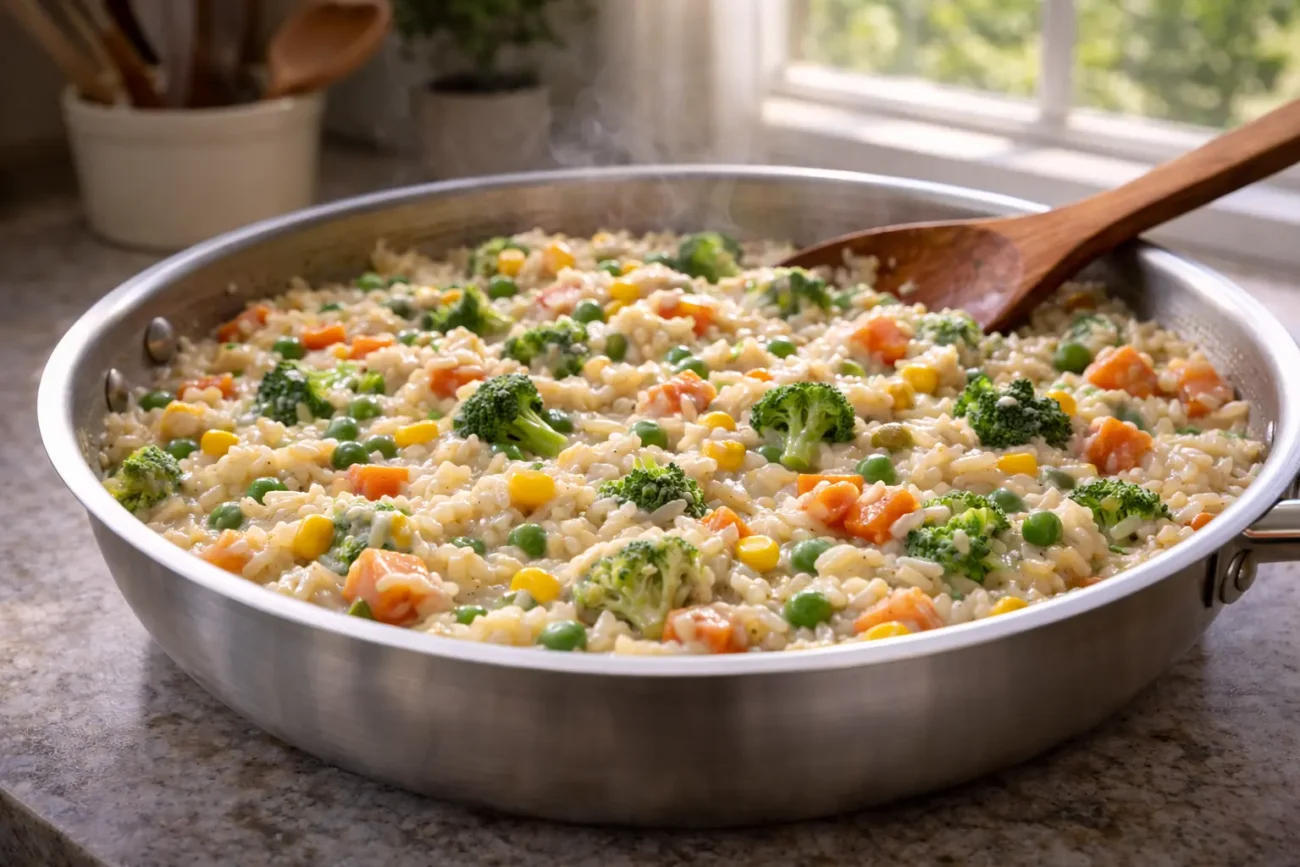
Creamy rice dinners are often associated with chicken. However, vegetables can create the same comfort when handled correctly. In fact, the key lies in managing moisture, timing, and fat so the rice stays tender and rich throughout cooking.
More importantly, this one-pan vegetable rice works especially well for weeknights when you want something filling without handling raw meat. Because everything cooks in one pan, the rice gradually absorbs the flavor of broth, vegetables, and cream together. As a result, the final texture becomes cohesive and stable.
It also fits naturally into the same structure as classic one-pan chicken rice, making it a reliable alternative when you want a lighter or more flexible option using ingredients already in your kitchen.
Time Breakdown
| Stage | Time |
|---|---|
| Prep Time | 10 minutes |
| Cook Time | 25 minutes |
| Total Time | 35 minutes |
Why This Recipe Is Popular
This recipe is popular because it solves a very common problem. Specifically, vegetable rice often turns out dry or bland when liquid balance is not managed properly.
However, by using controlled liquid ratios and a small amount of dairy, the rice develops a soft and creamy texture without becoming heavy. At the same time, the vegetables release natural moisture as they cook, which further supports even hydration of the rice.
This follows the same moisture balance principles explained in rice control, which governs texture in all one-pan rice meals.
Furthermore, cleanup stays simple because everything cooks in one pan. Consequently, this makes it especially useful for busy evenings while also helping deliver consistent and repeatable results.
When This Recipe Fits Best Into Your Day
This recipe works best when you need a dependable dinner without extra preparation. In particular, it helps on evenings when time and energy are limited.
For example, it fits well for busy weeknight dinners, meatless rotations, and budget-friendly meal planning. In addition, it is especially useful when you want fewer dishes and predictable results.
Because the structure closely matches other one-pan rice meals, it provides reliable comfort with simple ingredients. Therefore, it becomes easier to repeat successfully without adjusting your process each time.
Ingredients Overview
Each ingredient plays an important role in moisture, structure, and flavor balance. More specifically, every component contributes to stabilizing the final texture.
First, rice absorbs broth and cream gradually, which allows the grains to soften evenly over time. Meanwhile, vegetables release moisture slowly as they cook, which supports consistent hydration.
This stabilizing effect is explained in cream science, where fat and starch work together to bind the final texture.
Ingredients
• 1 cup long-grain white rice
• 2 cups low-sodium vegetable broth
• 1/2 cup heavy cream
• 1 tablespoon butter
• 1 tablespoon olive oil
• 1/2 cup diced onion
• 1/2 cup diced carrots
• 1/2 cup frozen peas
• 1/2 cup diced bell pepper
• 2 cloves minced garlic
• 1/2 teaspoon salt
• 1/4 teaspoon black pepper
• 1/4 cup shredded cheese
Ingredient Breakdown
Rice and Liquid Base
Rice absorbs broth and cream slowly, creating the main structure.
Vegetables
Onions, carrots, peas, and pepper release moisture and balance texture.
Fat and Cream Base
Butter, oil, cream, and cheese stabilize texture and improve consistency.
Step-by-Step Instructions
- Heat a deep skillet over medium heat and add olive oil and butter.
- Add diced onion and cook for 3–4 minutes until softened.
- Add carrots, bell pepper, and garlic. Cook for 2 minutes.
- Add rice and stir for 1 minute so grains are coated.
- This coating step mirrors the base structure used in cooking chicken, where early pan contact builds the cooking foundation.
- Pour in vegetable broth and cream. Stir gently.
- Bring to a light simmer, then reduce heat to low.
- Cover and cook for 16–18 minutes.
- Add peas during the last 5 minutes of cooking.
- Turn off heat and let rest covered for 5 minutes.
- Stir in shredded cheese before serving.
Nutrition Information
| Nutrient | Approximate Amount (per serving) |
|---|---|
| Calories | 420 kcal |
| Protein | 11 g |
| Carbohydrates | 52 g |
| Fat | 18 g |
Values are estimates and vary by ingredient.
Recipe Overview
This recipe works because liquid absorption is controlled properly.
The rice cooks gradually in measured liquid, and the cream stabilizes the texture. Vegetables release additional moisture, which prevents dryness and supports even cooking.
Resting time allows moisture to distribute evenly through the rice.
This same resting phase fixes common texture issues explained by wrong technique.
Recipe At a Glance
| Feature | Details |
|---|---|
| Servings | 4 |
| Skill Level | Beginner |
| Flavor | Mild and creamy |
| Cooking Method | One-pan stovetop |
| Make-Ahead Suitability | Good for 3 days |
Why This Recipe Tastes Good
Cream improves smoothness and helps retain moisture throughout the rice. At the same time, butter and oil improve mouthfeel and prevent dryness.
Meanwhile, vegetables balance richness while also providing natural flavor. Therefore, the dish does not feel overly heavy.
As a result, these combined effects create a stable and comforting texture that remains consistent even after reheating.
Helpful Tips and Variations
First, use long-grain rice for best texture because it maintains structure better during gradual absorption.
Additionally, avoid stirring too often during cooking. Otherwise, excessive agitation can disrupt structure.
You can also add mushrooms, corn, or zucchini. These vegetables release moisture and integrate well.
Alternatively, you can reduce cream slightly for a lighter version. However, maintaining some fat helps preserve texture stability.
Benefits of This Recipe
This recipe is affordable and flexible. Because it uses basic pantry ingredients, it remains practical for regular cooking.
In addition, it works well with common vegetables already available in most kitchens. Therefore, it reduces the need for special ingredients.
Furthermore, it fits into the broader one-pan rice cooking method used across comfort dinners, like chicken weeknight dinner.
It also fits into the broader one-pan rice cooking method used across comfort dinners, like chicken weeknight dinner.
It is filling and reliable for regular dinner rotation.
Storage and Make-Ahead Notes
Store the rice in the refrigerator for up to 3 days. During storage, moisture may redistribute slightly.
Therefore, when reheating, add a small amount of broth or water. This helps restore the original texture.
Although freezing is possible, fresh texture remains better. Consequently, refrigeration is usually preferred.
Final Thoughts
This one-pan vegetable rice proves that the same structure used in creamy chicken & rice applies successfully to vegetable versions.
Overall, this one-pan vegetable rice proves that the same structure used in creamy chicken and rice applies successfully to vegetable versions.
Because liquid balance and timing are controlled properly, vegetables provide the same satisfying and consistent results.
Therefore, this dish becomes a dependable option for everyday cooking while also offering flexibility and comfort.
Disclaimer: This recipe is for general informational purposes only. Results may vary depending on ingredients, equipment, and cooking conditions. Nutrition values are estimates. Always check for allergens and dietary needs, use proper food safety practices, and follow official U.S. guidance at FoodSafety.gov .
Frequently Asked Questions
What vegetables work best in one-pan creamy rice? ›
Peas, carrots, spinach, broccoli, and bell peppers work well because they cook evenly and add color without overpowering the base flavor.
How do I keep the rice from turning mushy? ›
Measure liquid carefully and cook at a gentle simmer. Avoid stirring too often, and let the pan rest covered before fluffing.
Can I use milk instead of cream? ›
Yes, but the result will be lighter and less thick. For a creamier texture, balance milk with broth and avoid boiling aggressively.
Is this recipe good for meal prep? ›
Yes, it stores well for a few days. Reheat gently with a small splash of broth to restore moisture and keep the rice tender.
What can I add for extra protein without chicken? ›
Beans, tofu, lentils, or a fried egg add protein while keeping the meal simple and weeknight-friendly.
