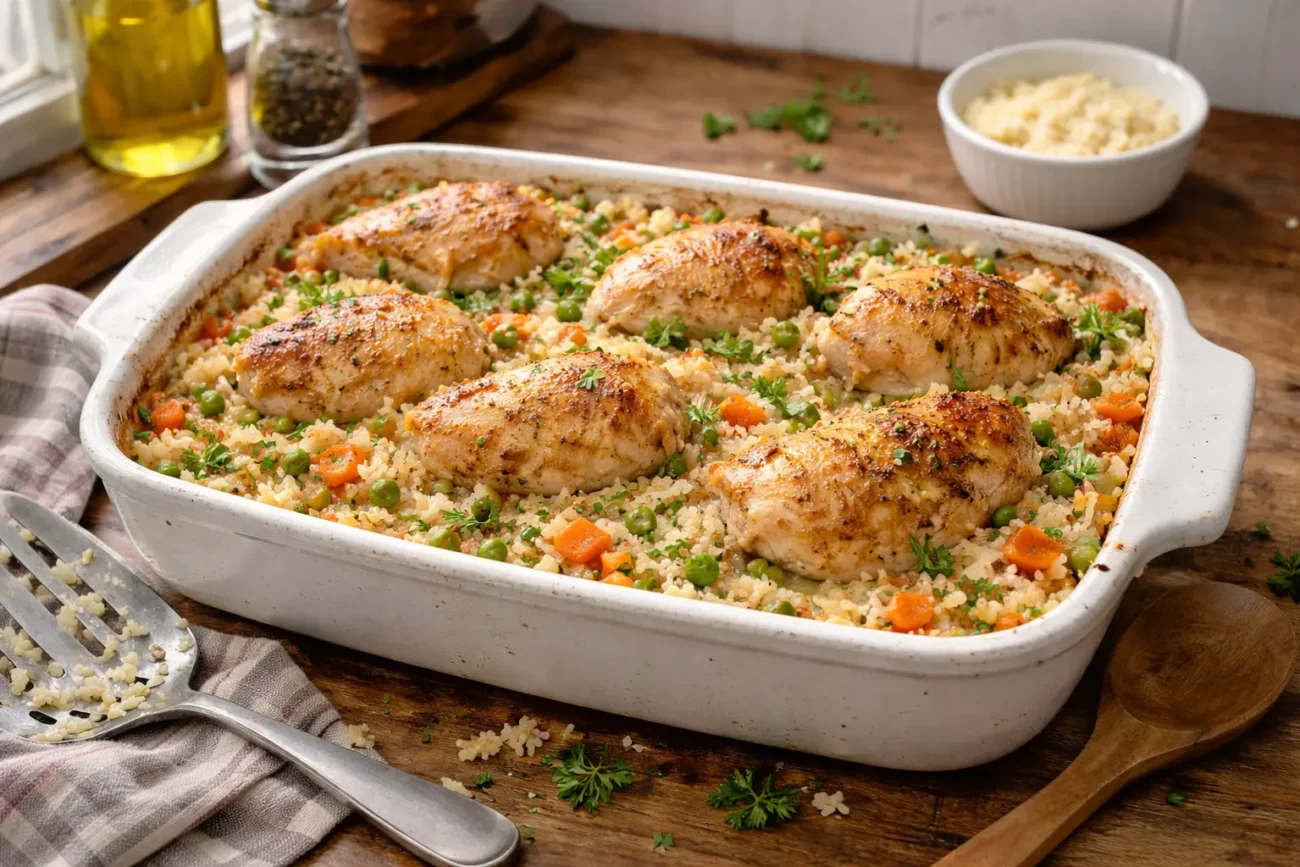
Baked chicken and rice casseroles look simple on paper. You combine ingredients, cover the dish, and let the oven do the work. However, many people end up with dry rice, firm chicken, or uneven texture. These structural issues are addressed in the broader master guide.
The problem is rarely the ingredients. Instead, it usually comes down to structure. Because baking relies on controlled steam and liquid absorption, small imbalances quickly affect the result.
Once you understand how moisture, heat, and layering work together, the outcome changes completely. Instead of guessing, you follow a system. As a result, baked chicken and rice casseroles become reliable rather than unpredictable.
Why Baked Chicken and Rice Casseroles Fail
Most failures happen for one of three reasons: incorrect liquid ratio, improper heat control, or poor layering.
First, too little liquid prevents the rice from cooking evenly. Since rice absorbs moisture slowly in the oven, insufficient broth leads to dry or undercooked grains. Proper absorption techniques are explained in rice control.
Second, high oven temperature causes rapid evaporation. As a result, steam escapes before the rice fully softens, and the chicken can become firm. Preventing this moisture loss follows the same corrections described in dry chicken fix.
Third, uneven layering disrupts cooking balance. When chicken sits directly against the pan without proper liquid coverage, it may cook faster than the rice beneath it.
Although these issues seem minor, they compound quickly. Therefore, structure matters more than seasoning.
When Structure Matters Most
Structure becomes especially important during weeknight baking. Because most people prefer hands-off cooking, they rely entirely on the oven to regulate moisture.
If the foil is loose, steam escapes. If the dish is overcrowded, heat circulation becomes uneven. Consequently, even a well-seasoned casserole can turn inconsistent.
In addition, different rice types absorb liquid at different rates. Long-grain white rice behaves predictably, whereas quick-cook or brown rice changes the timing. Therefore, choosing the correct grain supports structural success.
The Correct Liquid Ratio
The foundation of baked chicken and rice casseroles is moisture balance.
For standard long-grain white rice, a safe oven ratio is approximately 2 1/4 to 2 1/2 cups of liquid per cup of rice. Because some moisture evaporates during baking, slightly more liquid than stovetop cooking is necessary. These evaporation principles align with cream science
Milk can be added in small amounts to soften texture, while broth provides flavor depth. However, excess liquid creates heaviness. Therefore, the balance must remain controlled rather than estimated.
The Importance of Sealing the Dish
Steam control is critical. When the dish is tightly covered with foil, moisture circulates inside the casserole.
If gaps remain, steam escapes early. As a result, the rice may remain firm while the chicken dries slightly.
For this reason, the “no-peek” method works well. This same controlled system is demonstrated in one-pan chicken.
Proper Layering Technique
Layering influences both cooking speed and moisture distribution.
Rice should sit evenly across the bottom. Liquid must fully surround the grains. Chicken should rest on top rather than buried unevenly.
Because the chicken releases natural juices while baking, it contributes additional moisture to the rice below. Therefore, correct placement supports natural balance.
Resting the casserole for five minutes after baking also matters. During this time, steam redistributes, and the rice finishes absorbing remaining liquid.
How to Fix the Structure
If your previous casseroles turned dry or uneven, small corrections can solve the issue:
- Increase liquid slightly if rice remains firm.
- Lower oven temperature to prevent rapid evaporation.
- Seal foil tightly before baking.
- Use long-grain rice for consistent absorption.
- Allow proper resting time before uncovering.
When these adjustments are applied together, results improve noticeably. Preventing these failures is also explained in structure mistake.
Recipe At a Glance
Servings: 4
Skill Level: Beginner
Flavor: Mild and savory
Cooking Method: Oven-baked casserole
Make-Ahead Suitability: Excellent
Why This Structure Works
Controlled steam cooking protects moisture. Because the liquid remains trapped, both the rice and chicken cook gently.
Meanwhile, gradual absorption prevents mushiness. As a result, the grains stay separate yet tender.
When the system remains balanced, the final texture feels cohesive rather than patchy.
Common Mistakes
- Using too little liquid for oven cooking.
- Cooking at excessively high heat.
- Removing foil early during baking.
- Skipping the resting period.
- Substituting rice types without adjusting liquid ratios.
Helpful Tips and Variations
- Choose chicken thighs for additional moisture stability.
- Add vegetables near the end of baking to prevent excess water release.
- Slightly brown chicken before baking for deeper flavor development.
- Use consistent oven temperature rather than switching mid-bake.
Benefits of Understanding the Structure
- Prevents dryness and uneven cooking.
- Reduces wasted ingredients.
- Improves confidence in oven-based meals.
- Strengthens long-term cooking reliability.
Storage and Make-Ahead Notes
- Store leftovers in an airtight container for up to 4 days.
- Reheat gently with a small amount of broth to restore moisture. Proper reheating techniques are outlined in storage guide.
- Freeze portions for up to 2 months if needed.
Final Thoughts
Baked chicken and rice casseroles do not fail because they are complicated. They fail because the structure is misunderstood.
Once moisture balance, sealing, and layering are controlled, the oven becomes predictable. Instead of guessing, you follow a repeatable system.
That is what turns baked chicken and rice from inconsistent to dependable.
