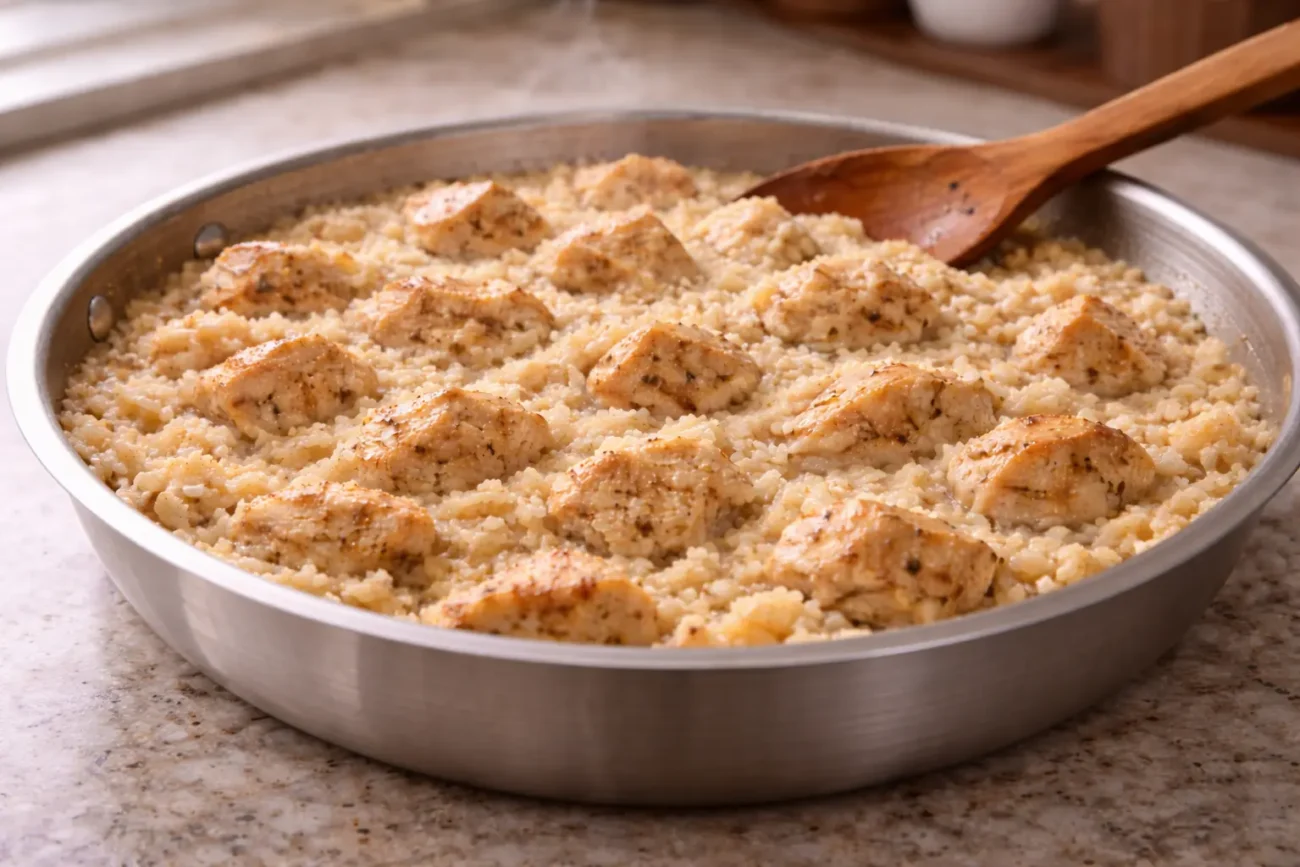
Chicken and rice should feel dependable. However, when the rice turns mushy, dry, or crunchy, the whole meal feels off.
Sometimes the chicken cooks perfectly, yet the rice texture ruins everything. Other times, the rice absorbs too much liquid or not enough.
If this keeps happening, the issue usually isn’t your cooking ability. Instead, it’s small moisture and timing imbalances that are easy to correct once you know what to look for.
Frequently Asked Questions
| Stage | Time |
|---|---|
| Prep Time | 10 minutes |
| Cook Time | 25 minutes |
| Total Time | 35 minutes |
Why This Recipe Is Popular
People search for rice fixes because chicken and rice is a weekly meal.
It’s affordable. It stretches ingredients. It works for leftovers. Yet rice texture is sensitive to heat, liquid, and lid control.
Once rice fails, the entire dish feels wrong. That’s why fixing rice problems is one of the most important skills inside this one-pan system.
When This Recipe Fits Best Into Your Day
This guide helps most when:
• You’ve made chicken and rice before and weren’t happy
• You’re meal prepping and need consistent texture
• You’re cooking for family and want it right the first time
• You’re trying to build confidence in one-pan dinners
If you’re working through the full chicken and rice reset system, this supports the main one-pan creamy chicken and rice guide.
Ingredients Overview
Rice depends on balance. It needs enough liquid to soften, but not so much that it becomes sticky.
Meanwhile, chicken releases juices as it cooks. Cream adds softness. Cheese thickens. All of these affect how the rice finishes.
When moisture control is steady, the texture settles properly.
Ingredients
• 1 cup long-grain white rice
• 2 1/2 cups chicken broth
• 1/2 cup heavy cream
• 1 1/2 pounds chicken (breast or thighs)
• 1 cup shredded mozzarella or mild cheddar
• 3 cloves garlic, minced
• 1 tablespoon olive oil
• 1/2 teaspoon salt
• 1/2 teaspoon black pepper
• 1/2 teaspoon paprika
Ingredient Breakdown
Rice Base
Long-grain rice gives the most predictable structure.
Liquid Control
Broth and cream determine softness and absorption rate.
Protein Impact
Chicken releases moisture while cooking, affecting rice texture.
Binding Layer
Cheese helps thicken and stabilize the final texture.
Step-by-Step Instructions
- Brown chicken first over medium heat. Do not fully cook it through.
- Proper browning technique from how to cook chicken prevents excess moisture release later.
- Stir in garlic and uncooked rice, coating rice in pan juices.
- Add broth and cream. Stir gently and bring to a light simmer.
- Reduce heat to low and cover tightly. Avoid lifting the lid repeatedly.
- Cook 18–20 minutes.
- Turn off heat and let rest covered for 5 minutes before stirring.
If rice is too firm, add 2–3 tablespoons warm broth and cook briefly.
If rice feels too wet, uncover and simmer gently 2–3 more minutes.
That final rest stage fixes more texture issues than most people realize.
Nutrition Information
Approximate per serving (based on 4 servings):
| Nutrient | Approximate Amount (per serving) |
|---|---|
| Calories | 520 kcal |
| Protein | 38 g |
| Carbohydrates | 36 g |
| Fat | 26 g |
Values are estimates and vary by brand and portion size.
Recipe Overview
Most rice problems fall into four categories:
Mushy rice – Too much liquid or too much stirring.
Crunchy rice – Not enough liquid or lid lifted too often.
Dry rice – Heat too high or insufficient resting time.
Watery rice – Liquid imbalance or not enough simmer time.
For a full breakdown of rice behavior, review rice control.
If your entire dish keeps failing, the core structure is explained inside one-pan creamy chicken and rice.
If you’re unsure whether baking or stovetop affects texture, see oven vs stovetop.
Each piece strengthens the full chicken and rice ecosystem.
Recipe At a Glance
| Feature | Details |
|---|---|
| Servings | 4 |
| Skill Level | Beginner |
| Flavor | Mild and savory |
| Cooking Method | One-pan stovetop |
| Make-Ahead Suitability | Good for 2–3 days |
Why This Recipe Tastes Good
When rice texture is correct, everything feels cohesive.
The grains stay separate but tender. The cream softens without becoming heavy. The chicken stays moist because the heat remains controlled.
Good texture creates the comfort people expect from this dish.
Helpful Tips and Variations
• Keep heat low once covered. High heat dries rice quickly.
• Always rest the dish before stirring.
• Use thighs if you consistently struggle with dryness.
• Measure liquid carefully each time for consistency.
Cream timing from cream science also affects how the rice thickens during resting.
For deeper technique guidance, revisit the full pillar reset guide.
Benefits of This Recipe
• Prevents wasted ingredients
• Improves weeknight confidence
• Makes leftovers better
• Reduces overcooking mistakes
• Strengthens one-pan cooking skills
Storage and Make-Ahead Notes
Store refrigerated up to 3 days.
When reheating, add 1–2 tablespoons of broth or milk before warming.
If freezing, expect a slightly softer texture after thawing. Reheat gently to preserve structure.
Final Thoughts
Rice texture controls the entire experience of chicken and rice.
Once you understand how liquid, heat, and resting work together, the dish becomes predictable.
And predictable meals are what make weeknight cooking easier.
Disclaimer: This recipe is for general informational purposes only. Results may vary depending on ingredients, equipment, and cooking conditions. Nutrition values are estimates. Always check for allergens and dietary needs, use proper food safety practices, and follow official U.S. guidance at FoodSafety.gov .
Frequently Asked Questions
Why does my rice turn mushy instead of fluffy? ›
Mushy rice usually results from too much liquid or excessive stirring. When starch releases too quickly, the grains lose structure and soften beyond the ideal texture.
Why does my rice stay hard in the center? ›
Undercooked rice often means there was not enough liquid or the heat was too high, causing evaporation before full absorption.
Should I lift the lid while rice is cooking? ›
It is best to avoid lifting the lid frequently. Escaping steam disrupts the cooking balance and can affect final texture.
How important is resting time after cooking rice? ›
Resting allows steam to redistribute evenly through the grains. This final step helps finish cooking gently without breaking down texture.
What is the simplest way to fix slightly undercooked rice? ›
Add a few tablespoons of warm liquid, cover tightly, and cook on low heat for a few additional minutes. Avoid raising the heat sharply.
