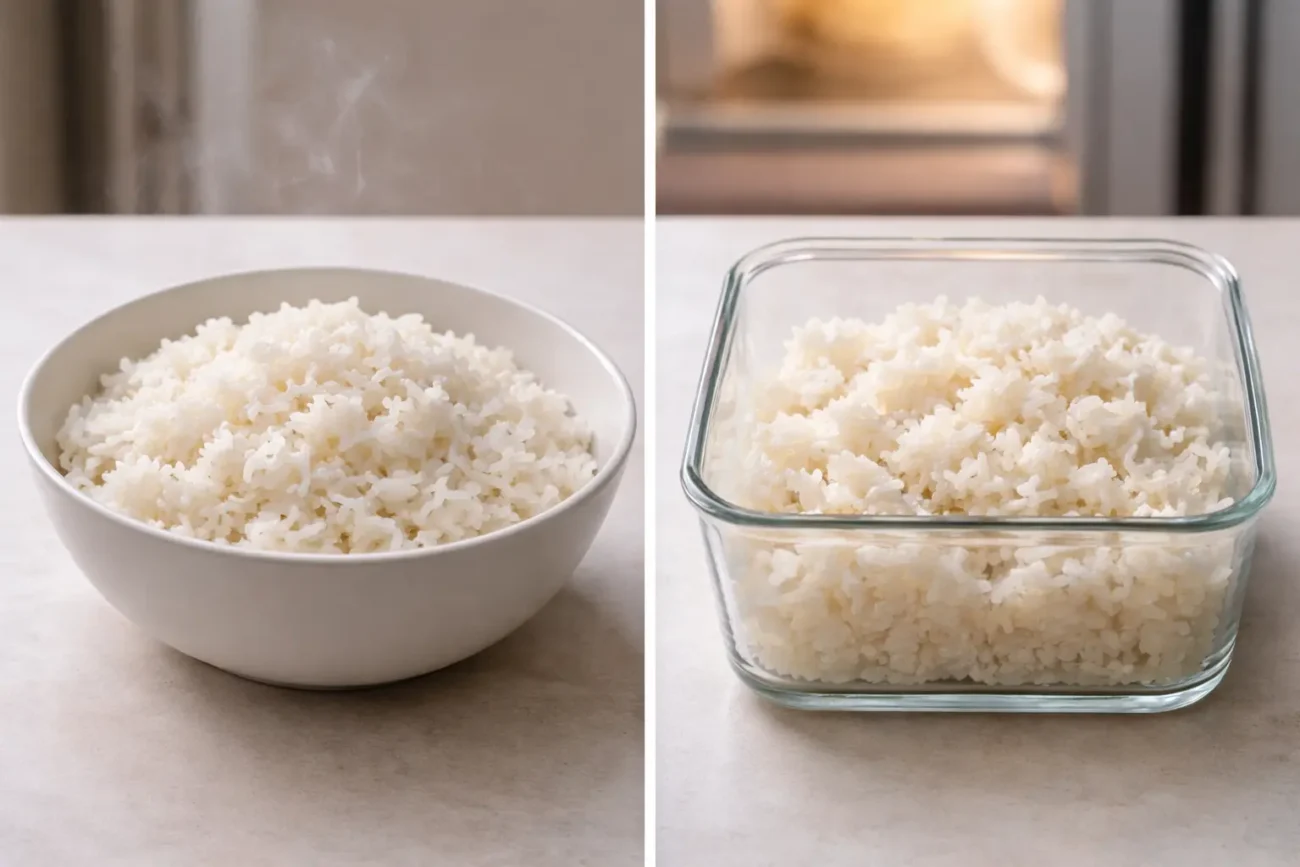
Freshly cooked rice feels soft, warm, and slightly sticky. After a few hours in the refrigerator, the same rice becomes firmer and sometimes a bit dry. Many people think this means the rice has simply gone stale.
In reality, refrigeration changes rice texture because of a natural process happening inside the grains. The starch molecules reorganize as the rice cools, creating a firmer structure. This change might seem like a flaw, but many cooks actually rely on it when applying cooking principles.
Understanding why refrigeration changes rice texture can help you cook better meals and use leftover rice more effectively.
Refrigeration Time Breakdown
| Storage Method | Recommended Time | Texture Change | Best Use |
|---|---|---|---|
| Room Temperature | Up to 2 hours | Rice stays soft but may dry slightly | Immediate serving |
| Refrigerator (1–2 hours) | Short chilling | Grains begin to firm slightly | Light reheating |
| Refrigerator (6–12 hours) | Ideal chilling period | Rice becomes firmer and less sticky | Stir-fries and rice bowls |
| Refrigerator (Overnight) | 12–24 hours | Grains separate well and lose extra moisture | Fried rice and sautéed dishes |
| Freezer | Up to 2 months | Texture remains mostly stable but slightly drier | Long-term storage |
The Science Behind Cooling Rice
Rice is mostly made of starch. When rice cooks in hot water, the starch granules absorb moisture and expand. This process softens the grains and creates the tender texture people expect from freshly cooked rice.
As the rice cools, the starch molecules begin to tighten and reorganize. This process is called starch retrogradation. During this stage, some moisture moves outward, which makes the rice feel firmer and less sticky.
Refrigeration speeds up this change, which is why chilled rice feels noticeably different from freshly cooked rice, especially in dishes like smoky paprika.
Why Refrigerated Rice Feels Firmer
When rice cools, the starch molecules link together more tightly. This creates a stronger structure inside each grain.
Instead of soft grains sticking together, the rice becomes more separated and slightly dry. This firmer texture is actually helpful in many recipes because it prevents the rice from becoming mushy during cooking.
Many professional kitchens intentionally cool rice for this reason when preparing meals like a budget bake.
Why Chefs Prefer Chilled Rice
Fried rice is one of the best examples of how refrigerated rice improves texture.
Fresh rice contains too much moisture. When placed in a hot pan, it often steams rather than fries. This leads to clumps and a soft texture.
Refrigerated rice, however, has already lost some moisture. The grains stay separate and develop a slightly crisp surface when heated.
This is why many chefs cook rice a day ahead before making fried rice or hearty dishes like the bacon rice fix.
Moisture Loss and Texture Changes
Refrigeration also causes small amounts of moisture to leave the rice.
Even when stored in a container, some water slowly evaporates from the outer layer of the grains. This contributes to the slightly dry texture people notice in cold rice.
Fortunately, this dryness can be reversed during reheating by adding a small amount of water or broth.
How to Reheat Refrigerated Rice Properly
Reheating rice with moisture helps restore its soft texture.
Adding a tablespoon of water or broth before heating creates steam that softens the grains again. Microwaving with a loose cover also traps steam and improves texture.
Gentle reheating works best. High heat can dry the rice further and make it tough, sometimes leading to dry chicken fix.
Safety Considerations
Cooked rice should be refrigerated within two hours after cooking. Leaving rice at room temperature for too long allows bacteria to grow.
Once refrigerated, rice should be eaten within three to four days. Keeping it in a sealed container helps preserve both safety and quality.
Reheat rice until it is steaming hot before eating.
Storage and Make-Ahead Notes
Store rice in an airtight container in the refrigerator.
Use refrigerated rice within four days for best quality. If you need longer storage, rice can be frozen for up to two months.
When reheating, add a splash of water or broth to restore moisture and improve texture so it can pair well with meals like a simple kids dinner.
Recipe Facts And Nutrients
Calories: ~205 kcal per cup
Protein: ~4 g
Carbohydrates: ~45 g
Fat: ~0.5 g
Rice mainly provides carbohydrates for energy, and it pairs well with protein-rich foods to create balanced meals.
The Bottom Line
Refrigeration changes rice texture because the starch inside the grains reorganizes as the rice cools. This natural process creates firmer, less sticky grains.
Although the change might seem like a disadvantage, it actually improves many dishes such as fried rice and casseroles.
Understanding this process allows home cooks to store rice safely and use leftovers in new and flavorful ways.
